Tokyo Game Show 2026: an AI pavilion, 85.8% of Japanese developers on generative AI, and a missing China
Tokyo Game Show turned 30 this year and marked it by running five days instead of four, September 17 to 21 at Makuhari Messe. CESA counted a record 1,138 exhibitors, 540 from Japan and 598 from overseas, across 3,999 booths and 53 countries and regions. Then Typhoon No. 25 arrived and the organizers cancelled the final day. CESA's notice, Inven Global on the exhibitor count.

The official key visual, still promising five days. Image: CESA / Tokyo Game Show.
Three things from the show are worth more than the headline numbers: what CESA's own survey says about AI adoption, what the AI pavilion actually showed, and who didn't come.
85.8% is the number to remember
CESA released a preview of its Game Industry Report 2026 on the first business day. Of 1,349 developers who answered its survey between May and August, 63.0% said they use generative AI routinely in their work and 22.8% use it occasionally, which adds up to 85.8%. Another 8.6% are evaluating it. Only 4.8% have never used it, and 0.7% tried it and stopped. The survey covered producers, directors, engineers, artists, sound designers, game designers, QA, and executives, so this isn't a poll of one enthusiastic discipline. Inven Global on the survey, Automaton.
Last year's CESA report put adoption at 51%, though that figure came from member companies rather than individual developers, so the two aren't a clean pair. The company-level survey ran again this year and 48 of 220 members answered. Asked what they expected from the technology, 38 named efficiency and productivity, 30 named shorter development cycles, and 29 named lower development and operating costs. The most common way of managing it was the sensible one: humans check, correct, and supervise, and generated output doesn't ship raw.
What the AI pavilion showed
The show gave AI its own zone this year, an AI Technology Pavilion with 14 companies including Adobe, Tencent Cloud, Meshy AI, Studio51, Heroz, and ZEAL. The demo that got the most attention was Meshy's. A visitor typed a character description, the booth generated a 2D concept, and then turned it into a 3D model. The Meshy representative told Seoul Economic Daily that a process that used to take about a month by hand now finishes in about three minutes. Seoul Economic Daily.
That demo ran on Meshy 7.1, which shipped a week before the show. The update is narrower than Meshy 7 in August: it adds an Ultra 4K mode that generates geometry at 4096³ instead of 2048³, with raw meshes of up to 80 million triangles before simplification. Meshy's own Detail Richness benchmark, which measures how much of a model's visible surface still carries fine orientation changes inside a single rendered pixel, puts 7.1 at 23.1% at 4096 resolution against 21.9% for Hi3D 3.0, 21.1% for Rodin 2.5, 17.3% for Tripo 3.1, and 14.7% for Hunyuan3D 3.1. Vendor benchmarks get the usual discount, and this one measures exactly the thing the release was built for. Two practical limits: Ultra 4K takes a single image only, and downloading any 7.1 result needs a paid plan. Meshy 7.1 announcement.
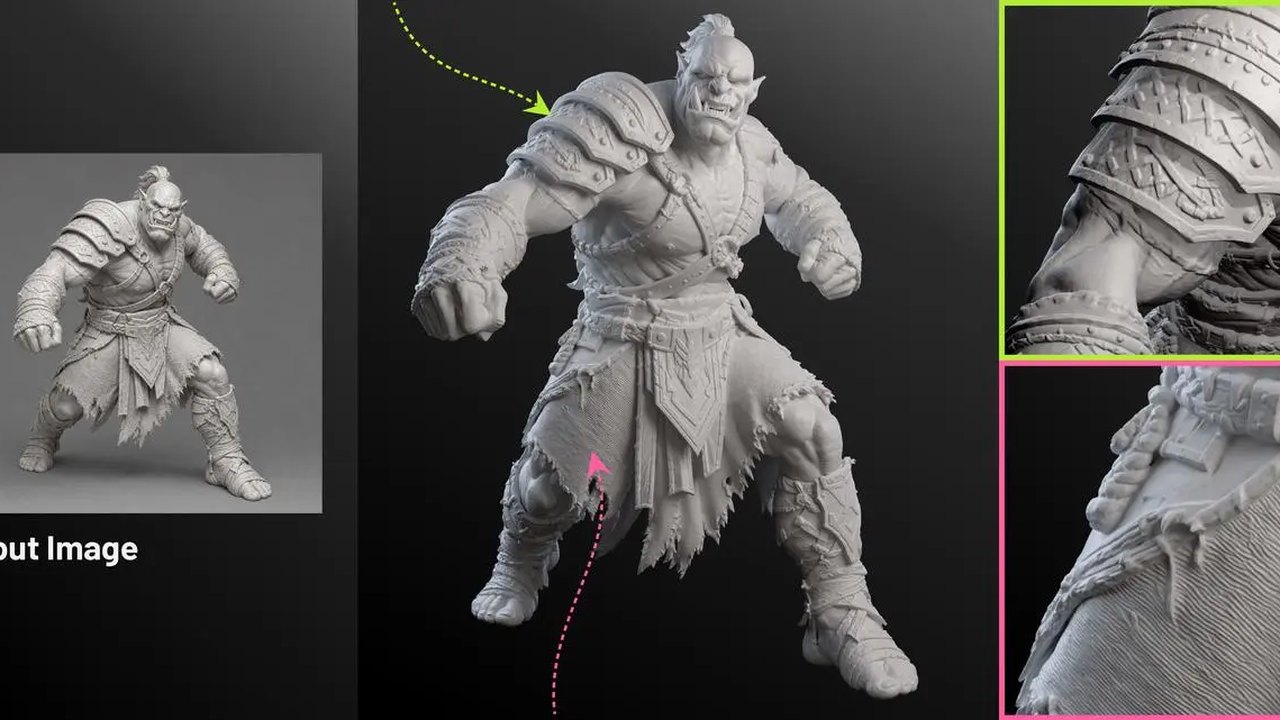
An Ultra 4K result from the Meshy 7.1 launch post. Image: Meshy.
The more interesting AI on the floor wasn't in the pavilion at all. Nexon Games brought a playable build of Fareidolia, from its RX Studio, with a voice feature that lets you talk to characters and call companions by name. According to Seoul Economic Daily the recognition runs on the device rather than a server, with the processing trimmed to keep a phone's heat and battery in check. That is a shipping studio putting conversational input into a game as a mechanic, not a tech demo. Inven Global on Fareidolia.
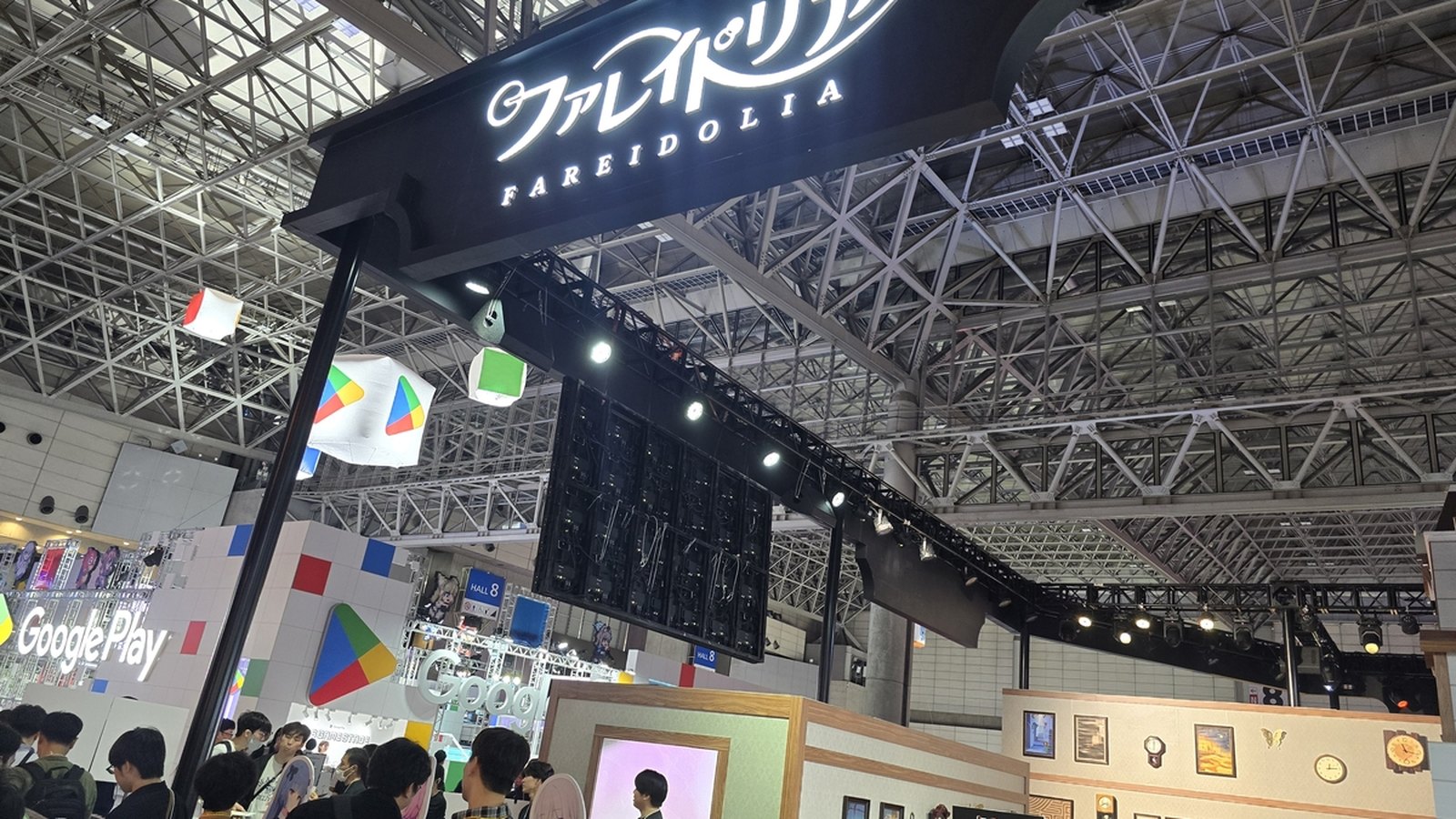
The Fareidolia booth on the show floor. Photo: Seoul Economic Daily.
Who didn't come
The record exhibitor count hides a large hole. Niko Partners counted 72 exhibitors from mainland China against 112 last year, and two from Hong Kong against 18. Nikkei Asia put the combined drop at more than 40% and tied it to worsening relations between Tokyo and Beijing. Tencent's Level Infinite, NetEase, Perfect World, Seasun, Papergames, Hypergryph, Bilibili, Manjuu, Century Huatong, and Hero Games all skipped the consumer floor, and miHoYo stayed away for a second year. Some of those companies ran full public booths at Gamescom three weeks earlier. Niko Partners, Nikkei Asia.
Korean publishers filled the space. Nexon, Netmarble, NCSoft, Smilegate, and Shift Up all brought new titles or playable builds. For a show that has spent a decade becoming the place Chinese publishers meet the Japanese market, that's a real shift, and it happened in one year.
The final day was cancelled on September 20, when CESA decided the typhoon's afternoon winds and rain made a public day too risky for visitors, exhibitors, and staff. The stage program moved online, with Capcom and others streaming what they'd planned to show in the hall.
Why this lands on us
We've been tracking the same adoption curve from different angles all year. GDC in March found developers split on AI. Steam's disclosure data in July showed one in three new games declaring it. Korea went AI-native in a week that same month. CESA's 85.8% is the Japanese data point, and Japan is the market that was supposed to resist this longest. The studios in that survey include the ones whose art direction is the reason people buy their games, and they're using the tools anyway, with a human checking the output. That's the same model we run in the Game Creator: the AI does the work, you decide what ships.
Meshy's three-minute demo is the pitch we'd make about image-to-3D too, so it's worth being precise about what the three minutes buy. You get a mesh with detail. You don't get a rigged, animated, engine-ready character, which is the part that used to take the month. That's why our 3D pipeline treats generation as the first step, with rigging and animation as the steps that turn a mesh into something a game can use, and why we still recommend reading how the current generators compare before picking one.
The China numbers matter to us for a plainer reason. A large share of our readers come through the Chinese edition of this site, and the Chinese studios that skipped Tokyo didn't stop making games. They just stopped showing them there. Where they show up next tells you where the market thinks its audience is.
References
- CESA: Notice regarding the online event on September 21
- Inven Global: Tokyo Game Show 2026 features record-high 1,138 exhibitors
- Inven Global: 85.8% of Japanese game developers use generative AI for work
- Automaton: Over 85% of Japanese game developers use generative AI
- Seoul Economic Daily: AI takes center stage at Tokyo Game Show 2026
- Meshy: Meshy 7.1, Ultra 4K detail richness benchmark
- Inven Global: Nexon Games unveils Fareidolia playable demo at TGS 2026
- Niko Partners: Chinese publishers scale back presence at Tokyo Game Show 2026
- Nikkei Asia: Tokyo Game Show sees sharp drop in China exhibitors as ties worsen