Tencent leads an $18M round in W4 Games, and Godot gets a go-to-market partner for Asia
W4 Games announced an $18 million Series B on August 25, led by Tencent. OSS Capital, LUX, Naval Ravikant, and Tobias Lütke's family office joined the round, which brings the company's total raised to $33 million after a $15 million Series A in late 2023.
W4 is the commercial company that Godot's lead developers Juan Linietsky, Rémi Verschelde, and Fabio Alessandrelli founded in 2021. It sells what the open-source engine doesn't ship: console export for PlayStation, Xbox, and Switch, a managed backend called W4 Cloud, and enterprise support contracts. The Godot engine itself stays MIT-licensed and governed by the Godot Foundation, which W4 doesn't own.
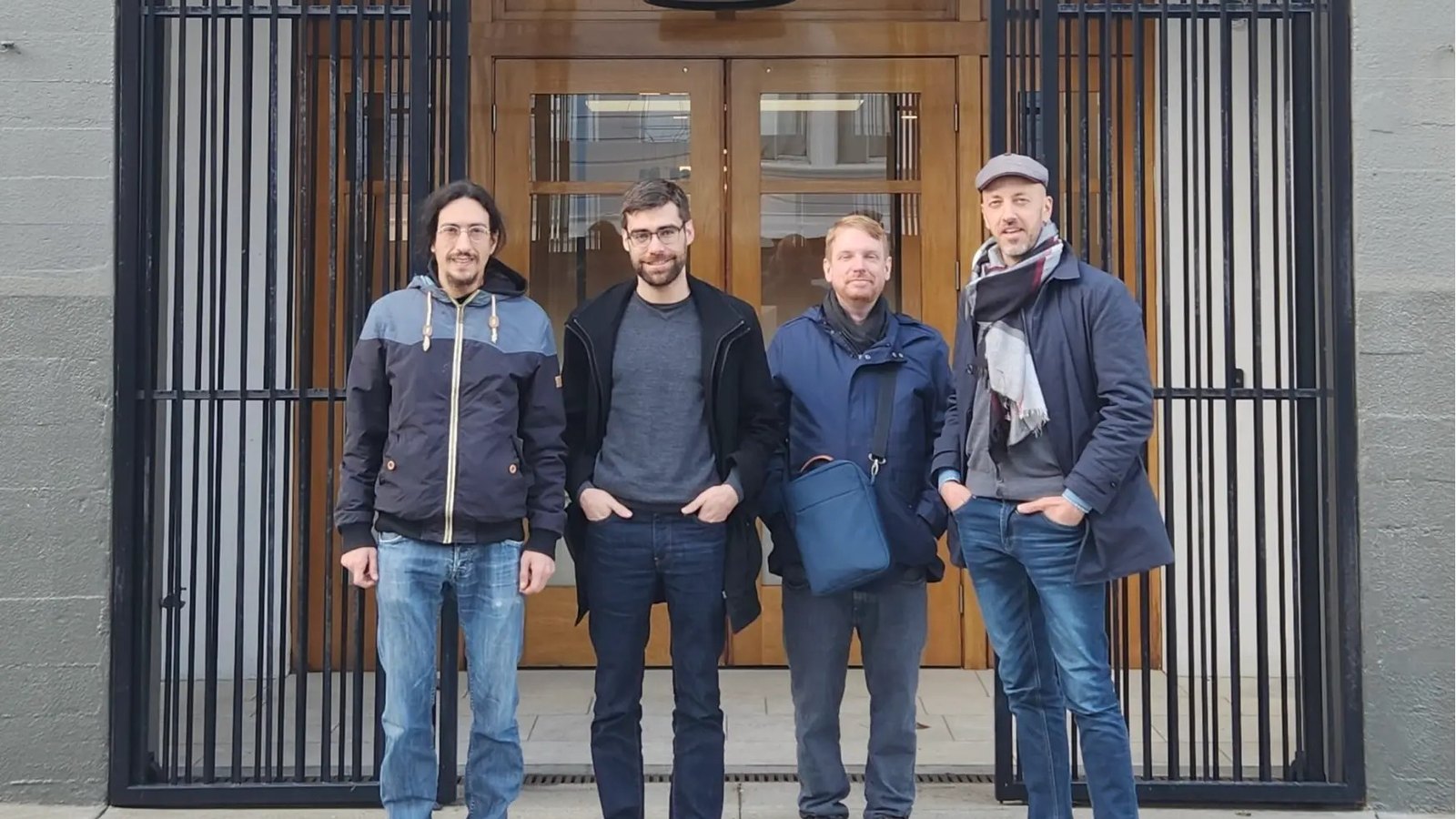
The W4 Games founding team. Photo: W4 Games.
What Tencent is actually buying
The money is the smaller half of the announcement. Alongside the investment, W4 signed a multi-year strategic partnership with Tencent covering go-to-market, localization, ecosystem support, and developer advocacy for Godot and W4's products across Asia, with China named explicitly. W4 says it will grow its international team by 50% and speed up its enterprise offering.
Co-CEO Nicola Farronato called it "an important next step for W4 Games as we expand globally and bring Godot to more studios and developers." Linietsky framed the engine's position more bluntly, saying Godot "has emerged as one of the world's fastest-growing game engine technologies."
The numbers W4 attached to that claim are worth keeping. Godot releases on Steam grew more than 50% year over year in both 2024 and 2025. The count of Godot games earning over $1 million a year went from 2 to more than 50 in three years. And at the Global Game Jam, Godot's share of entries climbed from 10% in 2022 to 50% today, with a similar curve at the GMTK jam.
The reaction, and why the license matters
The community response was predictable and not wrong to be cautious. Comment threads on GamingOnLinux and elsewhere filled with distrust of Tencent as an investor and worry that enterprise money pulls a hobbyist-friendly engine toward enterprise priorities. Others pointed out that Epic has run Unreal for years with Tencent as a minority shareholder, and that a large minority stake in a closed engine is a different thing from a Series B in a services company sitting next to an MIT codebase.
That last point is the one to hold onto. W4 doesn't control Godot's source, roadmap, or trademark. What Tencent gets is a partner that can take the engine into the largest games market on earth with local documentation, local support, and relationships with studios that have never seriously looked at anything other than Unity or an in-house engine. If that goes well, Godot gains a generation of Chinese developers. If it goes badly, the engine is exactly as forkable on August 26 as it was on August 24.
The engine, meanwhile, kept shipping through the news. Godot 4.7.2 landed on August 18 with 57 fixes, including a Windows fix for high-polling-rate mice that had been dragging some games from hundreds of frames per second to single digits. And on August 26 the team published 4.8 dev 4, with 224 fixes from 86 contributors, a native Trail3D node, multi-bounce ambient occlusion, node groups in the visual shader editor, and decals in the Compatibility renderer that web exports rely on.
Godot 4.8 dev 4 arrived the day after the funding news, with 224 fixes from 86 contributors. Image: Godot Engine.
Why we're paying attention
We've followed Godot closely this year, from the 4.7 release to the project's decision to refuse AI-generated contributions. We also spend a lot of time thinking about China, because a meaningful share of our readers arrive from Chinese search engines and because we built a WeChat mini game mode to reach players there.
Godot has had very little presence in China. Unity dominates mobile, the big publishers run proprietary tech, and the documentation gap alone has kept most small studios away. A Tencent-backed localization and advocacy program is the first serious attempt to change that, and if it works, the pool of developers who know a free, open, web-exporting engine grows in the one region where it's been thinnest. We'd rather share a market with more of those people than fewer.