Odyssey-3 learns GTA V from two hours of footage, then rides a horse in Red Dead Redemption 2
Odyssey, the world-model company founded in 2023 by Oliver Cameron and Jeff Hawke, unveiled Odyssey-3 on September 15. The pitch is one pretrained model that understands how the physical world behaves, with small "action decoders" bolted on to drive a particular body: a robot arm, a humanoid, a car, a drone, or a character in a video game. The gaming result is the one that stopped us. A movement policy trained on roughly two hours of GTA V footage produced horseback riding in Red Dead Redemption 2 and motorcycle riding in Sleeping Dogs, with no training on either game. Odyssey's announcement.
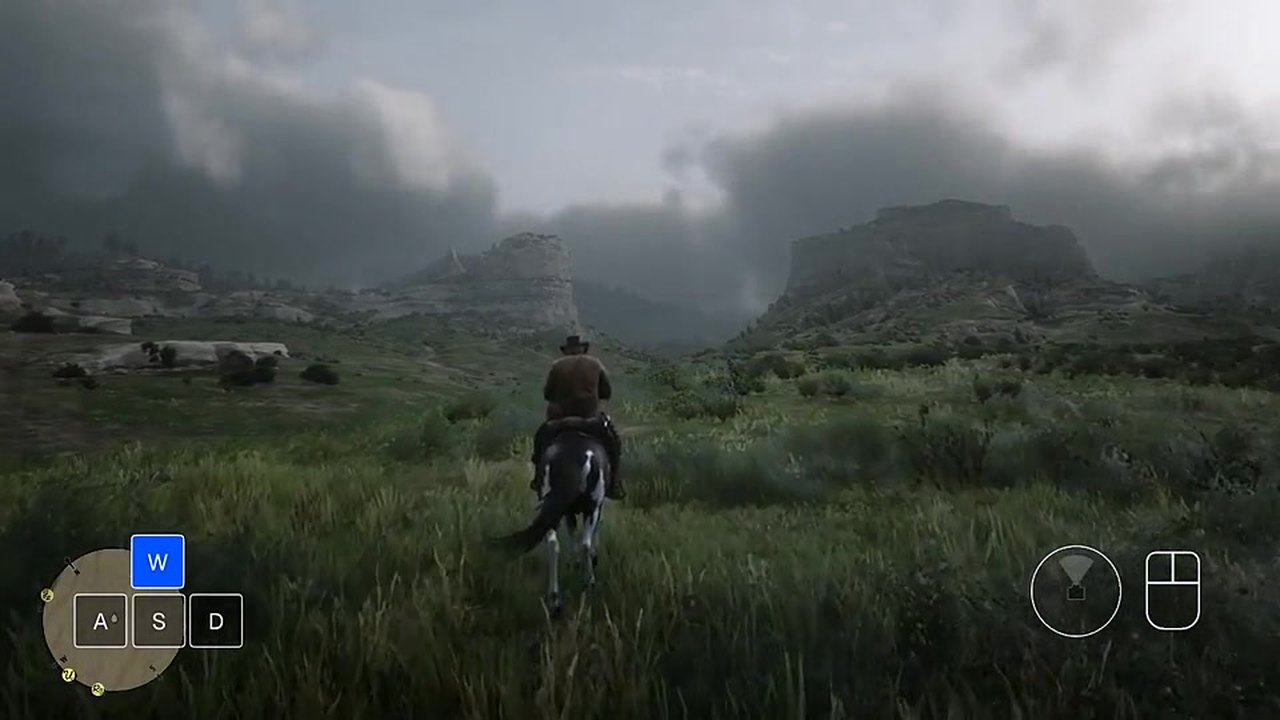
Odyssey-3 riding in Red Dead Redemption 2 with a policy trained only on GTA V. The overlay shows the keys it's pressing. Image: Odyssey.
One model, many bodies
Odyssey-3 is an autoregressive diffusion transformer trained on what the company calls a vast collection of visual observations, with the goal of learning a general, causal model of how the world behaves. That model stays frozen. For each embodiment, Odyssey trains a small action decoder on observation-and-action pairs, and the decoder's job is to translate the world model's internal state into the controls that body needs.
The claim is that the frozen model carries most of the understanding, so the decoders need very little data. Robot arms learn from tens of hours of demonstrations, and the announcement shows one recovering from a missed grasp and retrieving an object that had landed in an odd orientation. Humanoids, in work with Flexion, learn from tens of hours of teleoperation. Drones learn to fly to waypoints from tens of hours of simulated flight. The driving number is the most concrete: a policy trained on 20 hours of simulated driving traveled about 77% as far between safety-driver interventions on busy Indian roads as a policy trained on real footage. Every one of those is a vendor claim from a vendor demo, and none has been reproduced outside Odyssey.
The game agent sees pixels and presses keys
The gaming decoder is trained on gameplay recordings paired with the keyboard and mouse inputs that produced them. At run time the policy watches recent frames, emits key presses and mouse movement, and watches what happens next. There's no API into the game and no access to its state. It's playing the way a person on a laptop plays, which is also why the demo footage carries a little WASD overlay in the corner: those are the keys it's pressing.
Odyssey reports extended sessions in GTA V that include driving, shooting, and hand-to-hand combat. The transfer result is the striking part. A mobility policy trained on about two hours of GTA footage moved a character on horseback in Red Dead Redemption 2, a different game with a different character, vehicle, and world, and rode a motorcycle in Sleeping Dogs. Two hours is nothing. It means the decoder isn't learning "GTA" so much as learning to map the world model's notion of moving through a place onto four keys and a mouse.
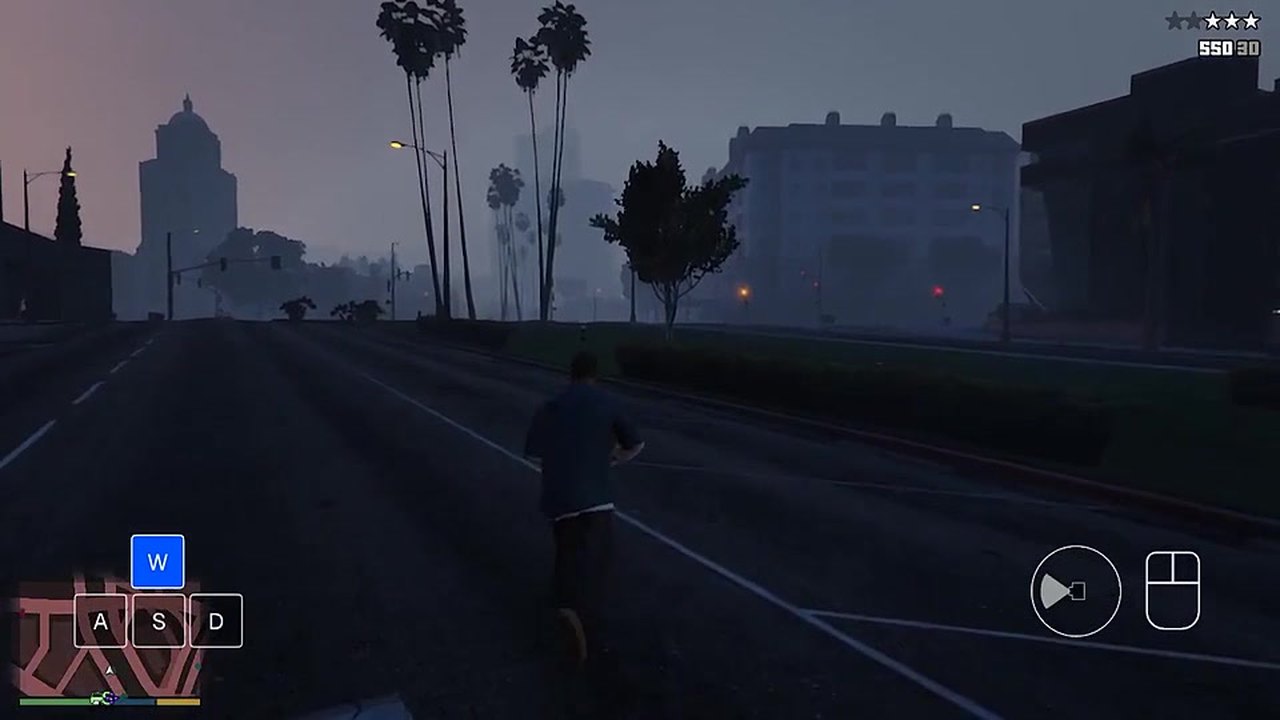
The same policy in GTA V, the game it was actually trained on. Image: Odyssey.
The announcement also shows the model generating environments and letting agents explore them, with the argument that a good enough simulator can train the agents that run inside it, and the agents' failures point at what the simulator gets wrong. That loop is the actual product. The robots, cars, and games are demonstrations that the loop closes. Odyssey says it will release the model publicly in the coming weeks, without saying in what form.
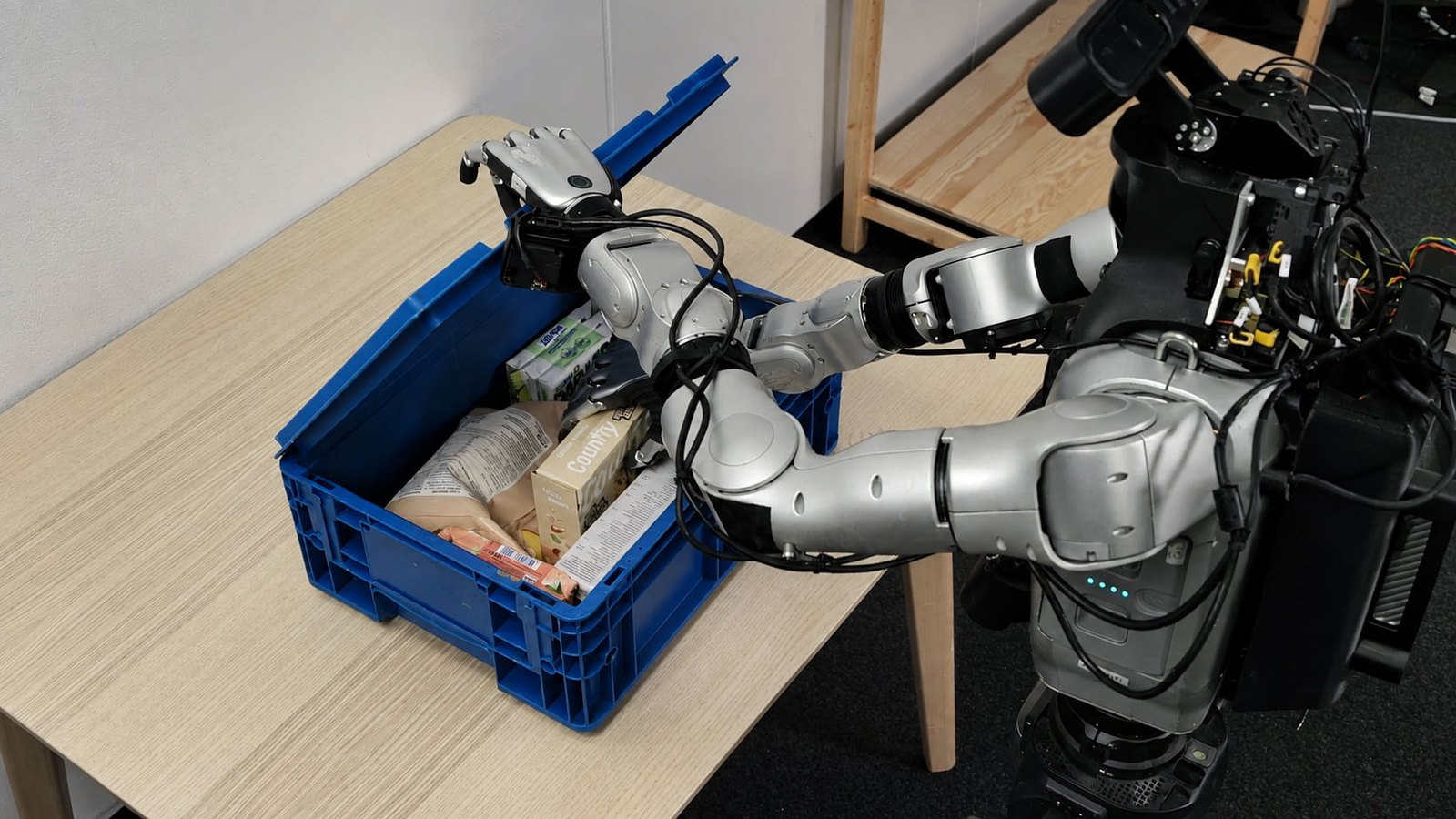
The same frozen model driving a two-armed robot through a grocery-crate task. Image: Odyssey.
Why this lands on us
We've covered three world-model stories this year and they point in different directions. MIRA replaced the game engine and rendered a playable match straight out of the model. World Labs' Atlas generates, reconstructs, and simulates the world itself. Odyssey-3 leaves the engine alone and plays inside it. Of the three, that's the one that touches a game you've already made.
Every game built in our Game Creator runs in a browser and takes keyboard and mouse input, which is exactly the interface this policy uses. An agent that can move through GTA V from two hours of footage can very likely move through a small creator-made game with less, and that's a playtester that never gets bored, doesn't need instructions, and can tell you within a minute whether your controls make sense. We spend a lot of effort on that question already, because inverted cameras and unresponsive jumps are the most common reason a new game gets abandoned. A cheap agent that flags "I couldn't get past the first door" before a human ever sees the game would change how we test.
It cuts the other way too. If moving through a 3D world transfers between games this easily, then the world-model side of the game-playing agent is close to commodity, and the part that will matter is the decoder: how a game exposes controls, how legible its feedback is, whether an agent can tell it did the right thing. Those are the same properties that make a game playable by a person. Building for the agent and building for the player may turn out to be the same job.