Appearance
Skip to content
Arcade › Epoch Planet
Epoch Planet
How to play
Click the game above and it runs right here in your browser. No download, no installer, no account needed. Maxwell Zertuche built it with Cinevva, so it works on a phone or a tablet too.
Discussion
Nobody has said anything about Epoch Planet yet. Play it, then tell Maxwell Zertuche what you would add next.
Make your own game
Epoch Planet was built by Maxwell Zertuche with the Cinevva game creator: describe the game you want in chat, watch it get built, and play it in your browser minutes later.
Remix Epoch Planet opens the real game in the creator and forks its actual files, chat and design doc, so you start from the code rather than from a description.
Read the build brief for Epoch Planet
Cinevva's analyzer read this game's design doc and its source, then wrote the brief below. "Make your own" hands it to the game creator as your opening message, so you start from a real spec rather than a one-line idea.
Recreate "Epoch Planet" as a dark, polished browser-based planet-creation and deep-time simulation game. The player first configures a named planet, then starts an autonomous deterministic simulation and watches billions of years of evolution and civilization history unfold.

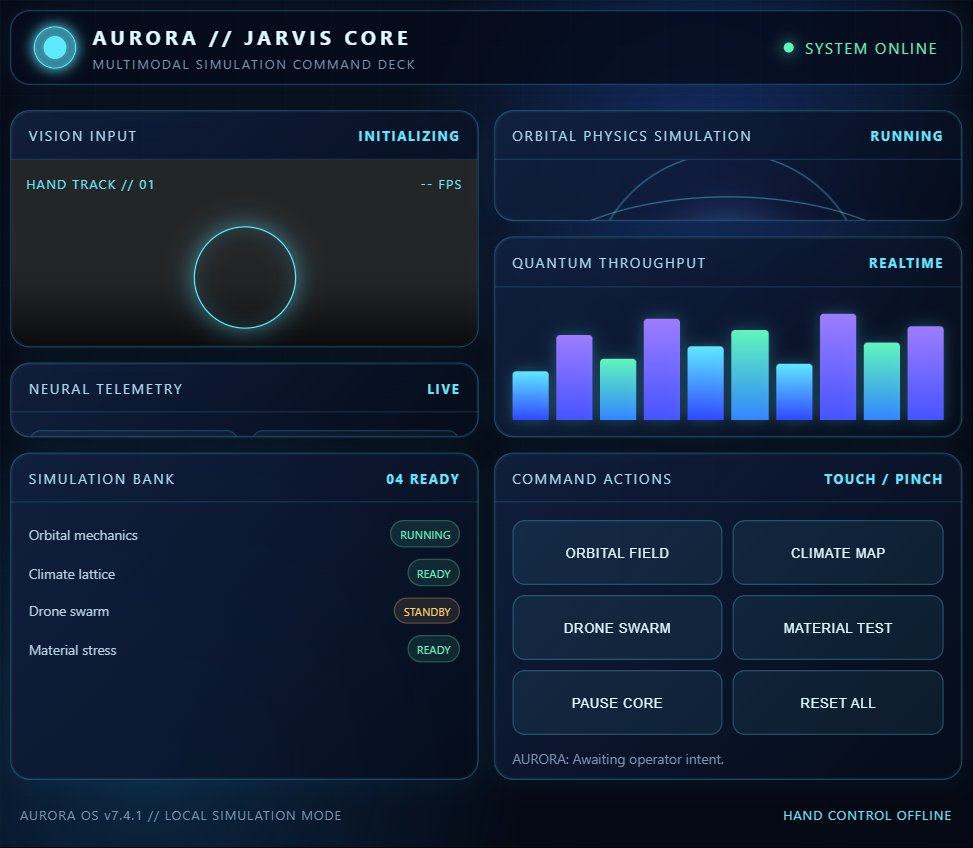
Layout and presentation: use a three-column responsive dashboard on a very dark navy background with subtle blue radial/linear gradients. Put a rounded translucent panel on the left for the Planet Creator, a large center panel for the world map and simulation controls, and a rounded translucent panel on the right for the history timeline and analysis. Panels have thin blue translucent borders, soft shadows, 14–18px rounded corners, compact system sans-serif typography, pale blue-white text, muted blue secondary text, and bright blue/purple gradient buttons. On narrow screens stack the panels vertically.

Left creator panel: heading "Planet Creator" and explanatory text saying the user designs a world and watches billions of years of history emerge from initial conditions. Include a planet-name text input and collapsible sections with range sliders and live numeric outputs. The Planet section contains star type select options Yellow main sequence, Red dwarf, Blue giant, and White star, plus Radius, Gravity, Rotation speed, Axial tilt, and Moons. Terrain contains Ocean coverage, Mountain frequency, Tectonic activity, Rivers and lakes, and Continent count. Climate & atmosphere contains Average temperature, Rainfall, Storm frequency, Oxygen, and Atmospheric pressure. Resources & life contains Metal richness, Fertile soil, Fresh water, Plant diversity, Animal diversity, Mutation rate, and Disease frequency. Also include fantasy/world toggles from the actual settings: Magic, Floating islands, Multiple intelligent species, Ancient ruins, and Mystic influence. Provide the visible actions for building/starting the simulation, randomizing settings, resetting, and replaying/reseeding the world. Randomize should generate a new planet name and randomize the star, sliders, and toggles.

Center panel: show a top status bar with the current planet name and subtitle. Display four stat cards: Age, Stage, Score, and Dominant civilization. Below, render a large 2D top-down/panoramic pixel-art planet map on an HTML canvas. The map is a 72 by 40 tile grid scaled to fill the available canvas, with crisp pixelated edges and no perspective or 3D globe. The screenshot/style should look like chunky block terrain: a bright medium-blue ocean background with lighter blue shallow/coastal areas and irregular dark-green land/forest masses, with hard square stepped edges. As the simulation develops, support the full generated biome palette: ocean blue (#3d8cff), coast/light blue, grass green, darker forest green, tan desert, brown mountain, pale ice, coral/orange volcanic terrain, and gold civilization capitals. Generate the map deterministically from the complete JSON of settings using a hash seed, smoothed random fields, continent bias, latitude-based heat, humidity, elevation, resources, and settings-driven thresholds. The planet wraps horizontally at the left/right edges and clamps at the poles.

On the map, color each tile by biome. When civilizations exist, overlay their controlled territory with a translucent wash of that civilization's color and draw a colored circular capital marker; outline the currently dominant civilization's capital in white. If Floating islands is enabled, add a few faint white elliptical outlines over the upper part of the map. Add two small translucent pill overlays on the map: left reads habitability and biodiversity percentages, right reads Paused, the current simulation multiplier, or Simulation complete. Include a biome/civilization legend below the map.

Under the map, provide simulation speed controls with pause/0x and 1x, 5x, 20x, 100x, and 1000x options. Starting a new simulation creates a deterministic history from the selected settings; rerunning the same settings reproduces the same map, names, milestones, and history. The simulation advances automatically at the selected speed, but must also be pausable.

Simulation mechanics: begin at age 0 with stage "Planetary cooling" and an event "Planet formed." Derive habitability, biodiversity, evolution rate, civilization potential, disaster risk, stable climate, star lifespan, and environmental state from the settings. Advance prehistory in very large steps: first life appears after hundreds of millions of years, plants after roughly a billion years, animals later, and intelligence after roughly 3.6 billion years, with exact timings affected by habitability, mutation, plants, animals, magic, ruins, and civilization potential. Milestone stages should include Planetary cooling, Microbial oceans, Complex biosphere, Animals diversify, and Age of civilizations. Create procedural species with names, kind (plant/animal/alien), intelligence, lifespan, aggression, social behavior, adaptability, size, diet, habitat, and color. The intelligent milestone creates one civilization normally, or multiple intelligent species when that toggle is enabled (with the implemented extra boost/behavior for magic).

Civilizations must be emergent rather than a fixed tech-tree menu. Each has a generated name assembled from a species name, population, technology, economy, culture, stability, happiness, military, diplomacy, ecology, territory, influence, innovations, wars, and capital location. Found them on suitable non-ocean high-habitability tiles, paint expanding territory, and display the dominant civilization based on population, technology, economy, culture, territory, and influence. During each civilization time step, population grows or declines from food, land quality, resources, fertility, water, disease, disaster risk, happiness, and stability; technology, economy, culture, territory, influence, ecology, diplomacy, military, and happiness change over time. Civilizations can split when large and unstable, innovate, enter golden ages, fight wars, sign peace treaties, suffer disasters, collapse, or disappear.

Generate procedural innovation names based on environmental tags and civilization state, using themes such as Tide, Reef, Current, Harbor, Sun, Dune, Canopy, Root, Stone, Peak, Frost, Iron, Harvest, Ley, Tempest, Echo, Spring, etc., combined with nouns such as Calculus, Lattice, Sails, Furnace, Gardens, Code, Engines, Observatory, Circuit, Symbiosis, and with Proto-, Hyper-, or Stellar- prefixes depending on technology. Innovations can improve food/economy/population, diplomacy/peace, energy/technology, medicine/happiness/stability, ecological restoration, space influence, or war/military, and appear in the event history.

Include emergent natural disasters selected from earthquake, volcano, pandemic, flood, drought, wildfire, asteroid, and (in cold conditions) ice age. Disasters reduce environment, biodiversity, population, stability, and happiness, with asteroid/high-energy events more severe. Wars produce casualties, penalties, instability, and sometimes high-energy catastrophe; occasional peace treaties and peaceful centuries award harmony score. Golden ages award culture/influence/happiness and score. A civilization collapses when population, stability, happiness, or global environment falls too low. End the run if no intelligent civilization remains for 500 simulated years or if the star reaches its lifespan; show stages "Extinction" or "Stellar death", add a final event, stop the simulation, and show the final score and extinction reason.

Scoring: track and display a numeric score with breakdown categories Survival, Innovation, Harmony, and Penalties. Award survival over time, major innovations, peaceful centuries, treaties, and golden ages; subtract for wars, collapses, and catastrophes. Track global environment and biodiversity continuously.

Right panel: make the upper portion an analysis dashboard with cards for Biodiversity, Environment, Living civs, Species, Innovations, Wars fought, Peak population, and Longest civ. Beneath it show a scrollable history/timeline list ordered newest first, with clickable rounded event rows. Each row displays formatted deep-time date, event title, event type, and up to three tags. Event types include world, mystery, evolution, civilization, innovation, schism, war, peace, golden-age, disaster, catastrophe, collapse, and end. Clicking an event fills a detail box with its title plus formatted time, full description, and colored pill tags. Keep a history limit of roughly 80 events and a timeline graph history of roughly 180 points.

Also include a timeline graph canvas in the analysis area. Use a translucent dark graph background, faint horizontal grid lines, and three colored lines over time: blue Score, gold Population, and green Environment. Label the lines at the top and show a waiting message before enough points exist. Format time as years, thousands, millions, or billions of years and population compactly as K/M/B. Preserve the visual language of the screenshot: clean dark sci-fi dashboard surrounding an intentionally low-resolution, blocky blue-and-green planetary map. Do not add combat controls, direct avatar movement, resource-clicking, or other manual action systems; the core interaction is configuring sliders/toggles, starting/pausing/speeding the deterministic simulation, inspecting the map, graph, and clickable history, then creating another planet.