Appearance
Chivalware turns matching tiles into a combat decision
Chivalware makes the floor beneath your character do several jobs at once. Its tiles give you somewhere to dodge, something to match, and a way to charge your next weapon. That creates a compelling problem: the route that prepares your best attack can also put you directly in danger.
Reported indie feature. This article draws on developer notes, inspected publisher footage and screenshots, and the independent reviews linked below. We haven't played Chivalware ourselves.
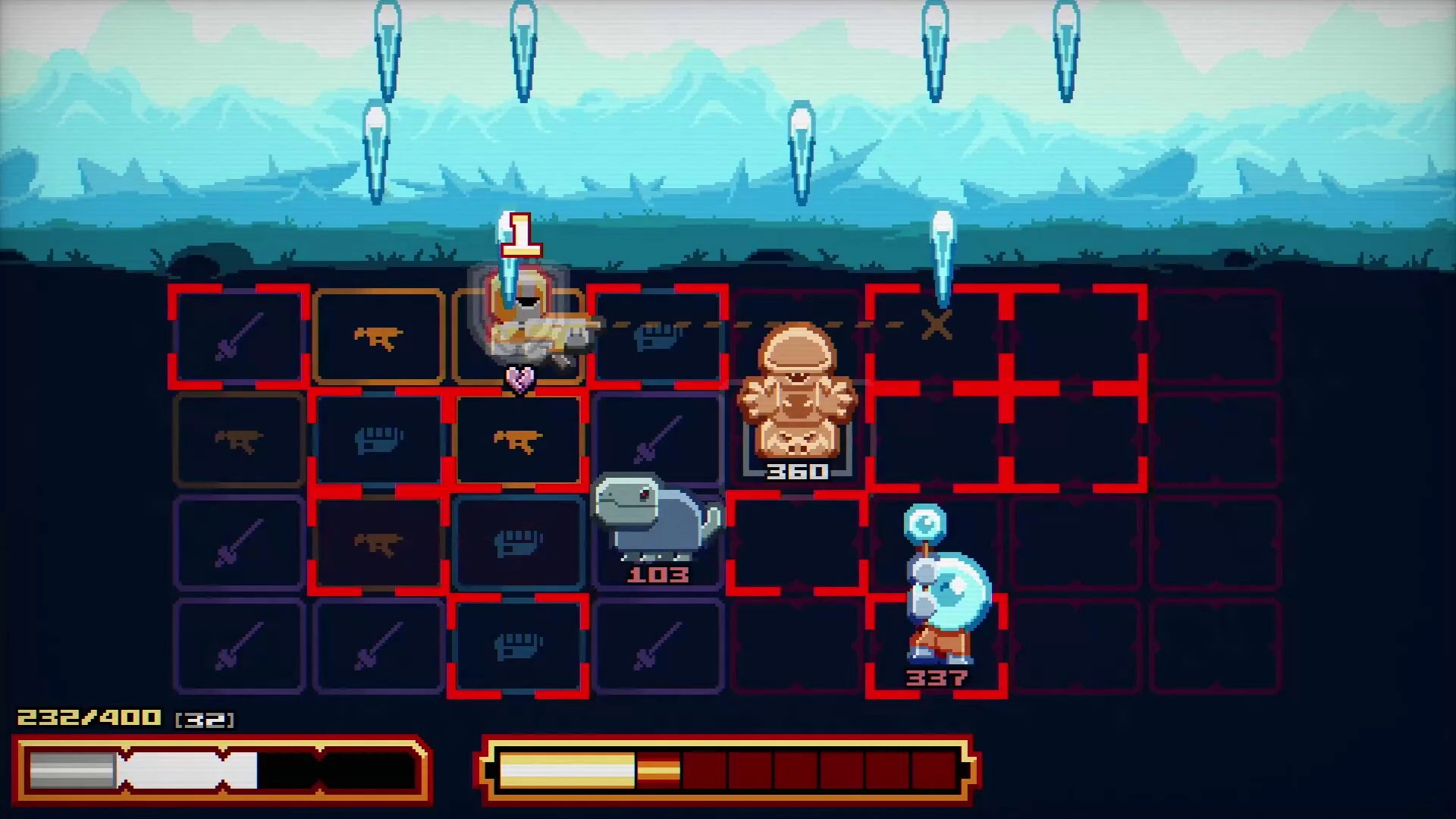
Regal Pigeon's action roguelite launched on November 5 for PC and Nintendo Switch 2. Its distinctive idea is easy to see in motion. You move across a small battlefield while enemies keep attacking, connect matching weapon tiles, then spend the resulting charges on attacks of your own. Matching and fighting share the same space and the same clock.
Every match changes your options
The Steam description explains the basic constraint: you carry three weapons, each associated with a tile color. Connecting at least three matching tiles charges the corresponding weapon, and larger matches give you more attacks. Your equipment determines what those colors can do.
That gives the matching system a purpose beyond clearing a board. If you need a particular weapon, you also need the tiles that feed it. Moving toward them competes with avoiding the next enemy attack. The publisher's trailer shows how quickly the available space changes, with marked danger zones, projectiles, and large attacks crossing rows of the arena.
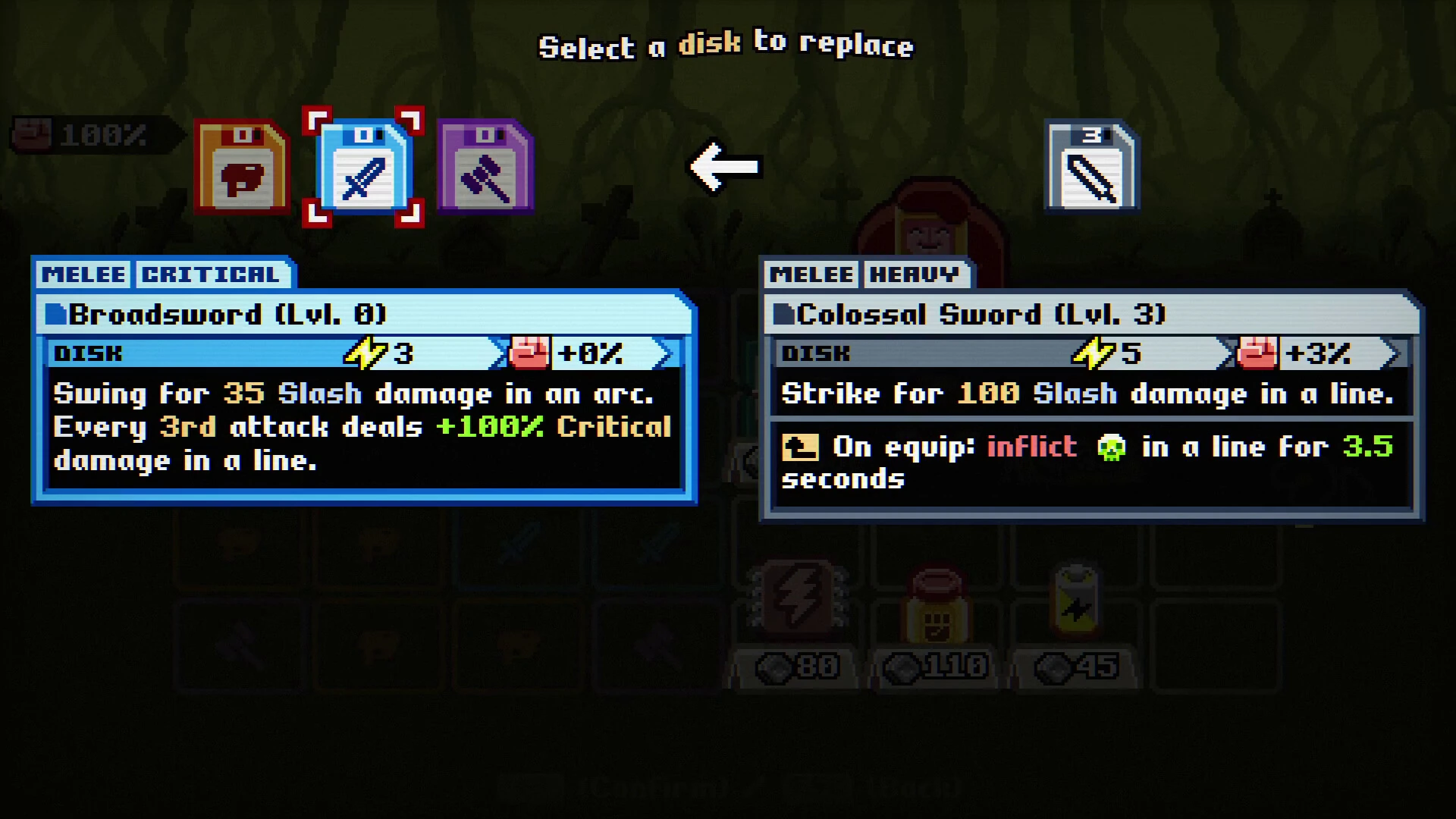
Weapon choice adds another layer. In the official equipment screenshot below, the Broadsword swings through an arc and gives every third attack a critical effect. The Colossal Sword strikes in a line and carries a separate effect when equipped. Swapping between them changes the positions from which an attack is useful, alongside its damage. The comparison asks you to choose an attack pattern and timing as well as damage.
Strong combat, a narrower range of encounters
The independent reviews suggest that this central idea holds up during play. In TheSixthAxis's PC review, Jason Coles praises the combat and describes the challenge of tracking matches, weapon choice, and enemy attacks together. His main reservation concerns variety: repeated enemies and bosses weaken the pull of further runs, even as additional difficulty settings extend the challenge.
Consollection's PC review reaches a similar balance. XLan describes responsive controls and readable attack warnings, while finding that the range of weapons doesn't fully offset recurring enemies and situations.
Progression is another reason to check your expectations. Tristan Jurkovich's Switch 2 review for Cosmic Circus enjoys the tactical combat but finds the absence of permanent stat growth discouraging. Coles places more value on the equipment and other options earned through the game's leaderboard progression. Together, these accounts point toward an audience that enjoys mastering a demanding combat system and trying different builds. Players who rely on steadily stronger characters to carry them past repeated failures may find the reward structure less satisfying.
A small arena with demanding information design
The resemblance to Mega Man Battle Network is deliberate. In his June reveal post, developer Max describes wanting more time inside that series' grid-based combat. His prototype added matching to the existing grid, making weapon selection part of movement. The useful design lesson is how one shared space connects several decisions. Each new system changes what a player needs from the next step.
That also creates a readability burden. Max's September demo update records a status-effect reference in the codex, text explanations beneath encounter icons, and changes to combat rewards so that offered upgrades work with the current build. These are practical responses to the complexity of the combat. A player can understand the matching rule immediately and still need help understanding what an unfamiliar icon or reward means.
There's a useful production detail in Max's discussion of the animation: he describes combining key poses with sprite squashing, stretching, and shaking. The result gives a solo developer several ways to emphasize a hit or movement. Its value here is communication, since the battlefield already asks the player to track so much.
Chivalware has a free Steam demo for trying that concentration of decisions. The US Steam store lists the full game at $9.99, discounted to $8.99 when checked on November 17. Use the demo to judge whether matching under pressure keeps you engaged, especially if repeated attempts and gradual mastery are what you enjoy in a roguelite.