Appearance
Hi3D releases a geometry refiner that starts with your existing mesh
October catch-up. Released October 23, 2026. Published November 13, 2026.
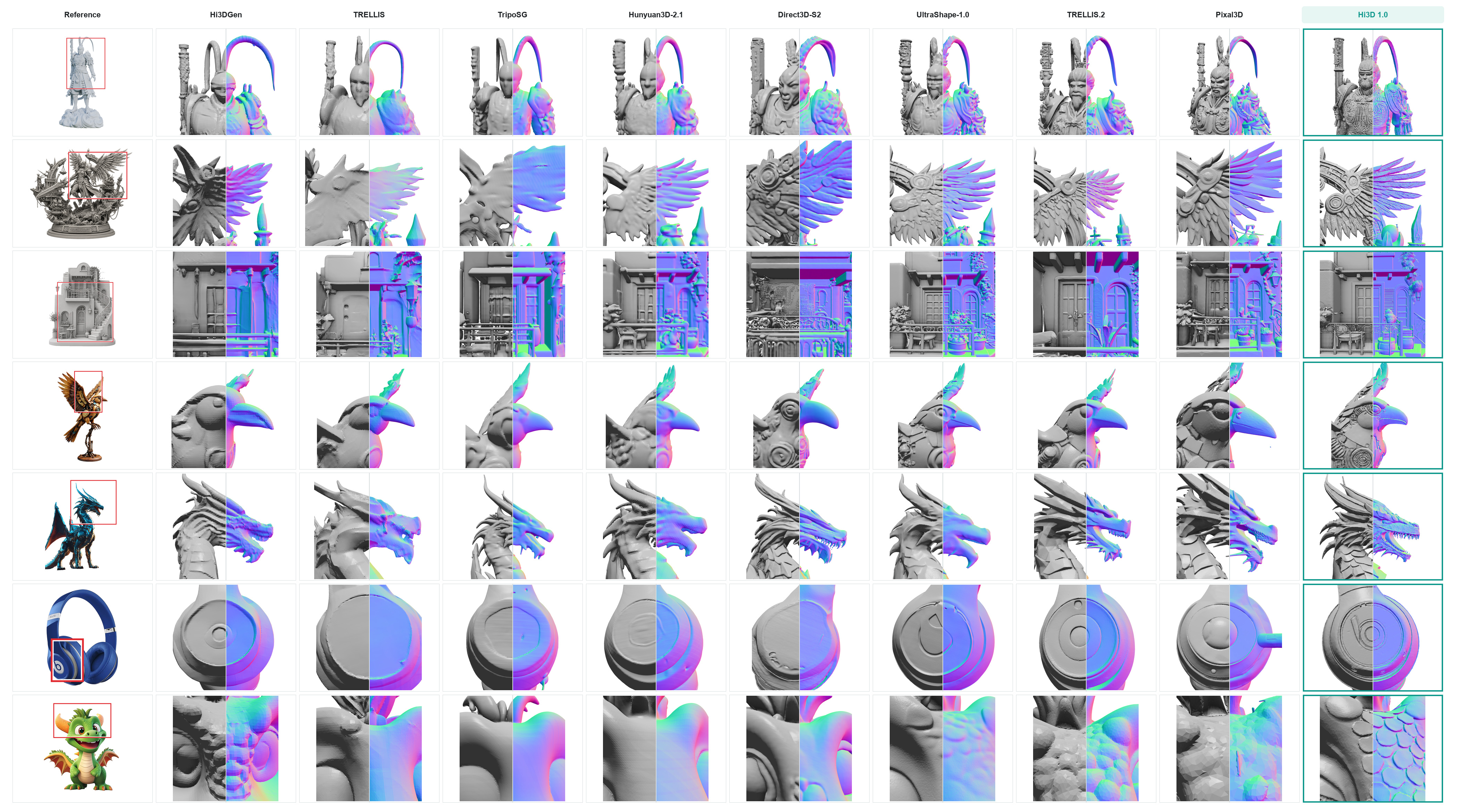
Hi3D v1.0 released inference code and model weights on October 23 for adding detail to an existing coarse mesh. It takes that mesh and a reference image of the same object, then refines the geometry in successive passes. For an asset workflow, this is a stage to try after producing the basic shape. Release repository.
Reference image
Hi3D geometry detail
What comes out of the refiner
The output is a mesh containing geometry only. Textures and materials still need another step. The coarse input remains important: a badly shaped starting mesh can carry its structural errors into the result, and surfaces hidden in the reference image are plausible completions. The pipeline also recenters and normalizes the object, so its original world position and scale won't survive unchanged. Pipeline details, output scope.
The advertised 1536³ setting describes an extraction grid. It doesn't specify a triangle count or prove that the exported asset fits a game's rendering budget. Inspect the mesh, its silhouette, and its smallest useful details before deciding how much geometry to keep.
The setup is substantial. Hi3D documents Linux, Python 3.10, and NVIDIA CUDA dependencies. The highest-resolution path has been validated on a 96 GB H20. The maintainers haven't established peak memory requirements or feasibility on smaller cards, and there is no CPU inference path. Installation requirements.
Read the terms for the part you're using
The release uses a custom Hi3D license. Commercial integrations have branding requirements, and products crossing the stated usage or revenue thresholds need a separate license process. The agreement treats standalone generated outputs separately from integrations containing the code or model weights. Hi3D license, sections 5, 7, and 9.
The optional image-to-mesh example calls Hunyuan3D-2 mini for its coarse starting shape. That upstream code and model retain their own terms. You can also supply an existing mesh directly. Training code, comparison meshes, and the evaluation system behind the paper's tables aren't included, so the public release doesn't let you reproduce those comparisons end to end. Release scope and external dependencies.