आधुनिक engines foliage overdraw को कैसे हराते हैं
लेखक Oleg Sidorkin, Cinevva के CTO और सह-संस्थापक

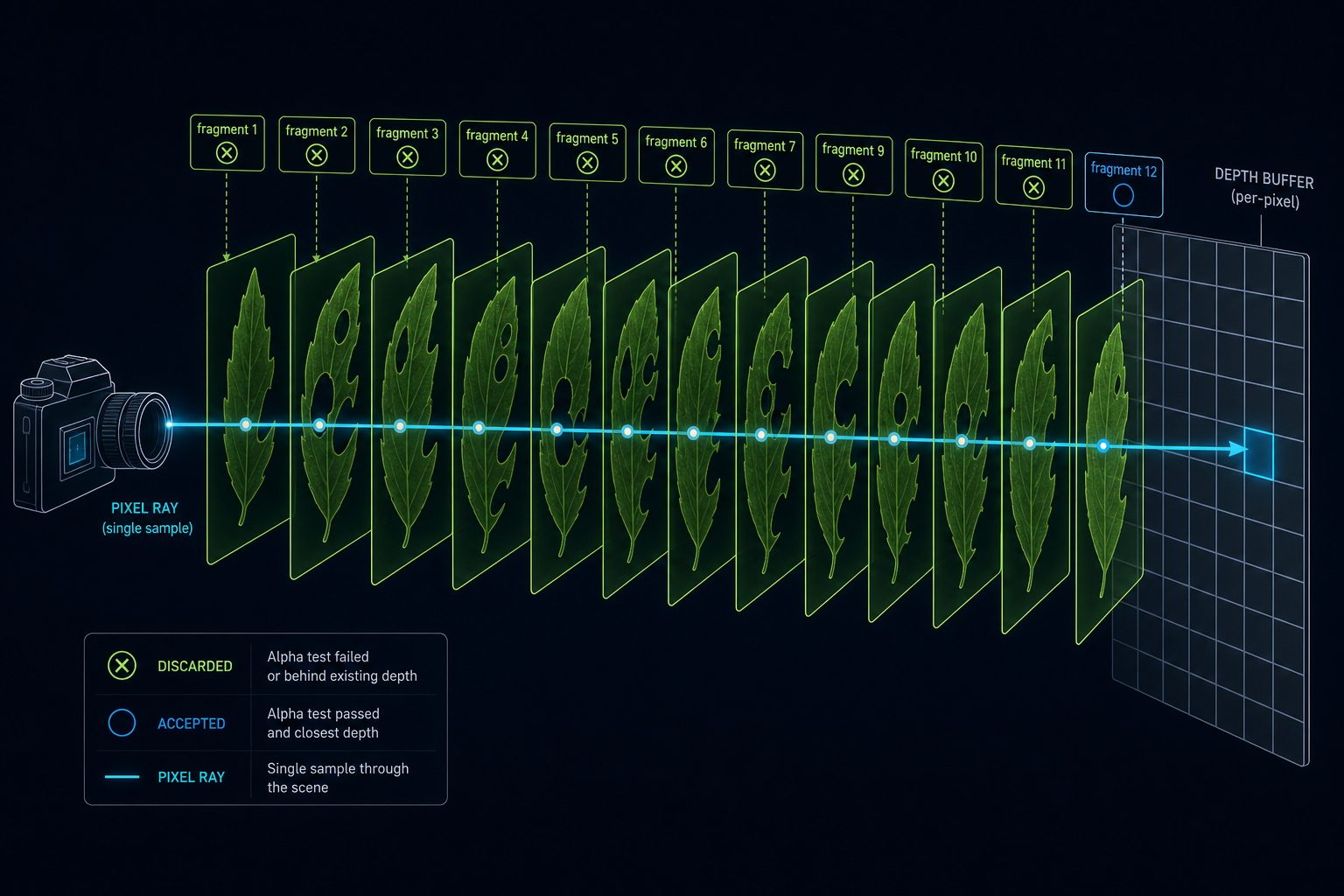
एक जंगल उन सबसे बुरी चीज़ों में से एक है जो आप किसी GPU से render करने को कह सकते हैं। हर पत्ता एक textured quad होता है जिसमें से एक alpha mask काटा गया होता है। ऐसे दर्जनों quads हर view ray के साथ एक-दूसरे के ऊपर ढेर हो जाते हैं। Rasterizer को पहले से जानने का कोई तरीका नहीं होता कि कौन से fragments alpha test पास करेंगे, इसलिए standard early-Z optimization जो opaque scenes को बचाता है, ज़्यादातर बंद हो जाता है। नतीजा यह कि एक ही screen pixel frame के स्थिर होने से पहले पूरे leaf shader को 10 या 15 बार चला सकता है। यही foliage overdraw है, और यह पिछले दशक में आए किसी भी game में एक open-world frame का सबसे महंगा हिस्सा है।
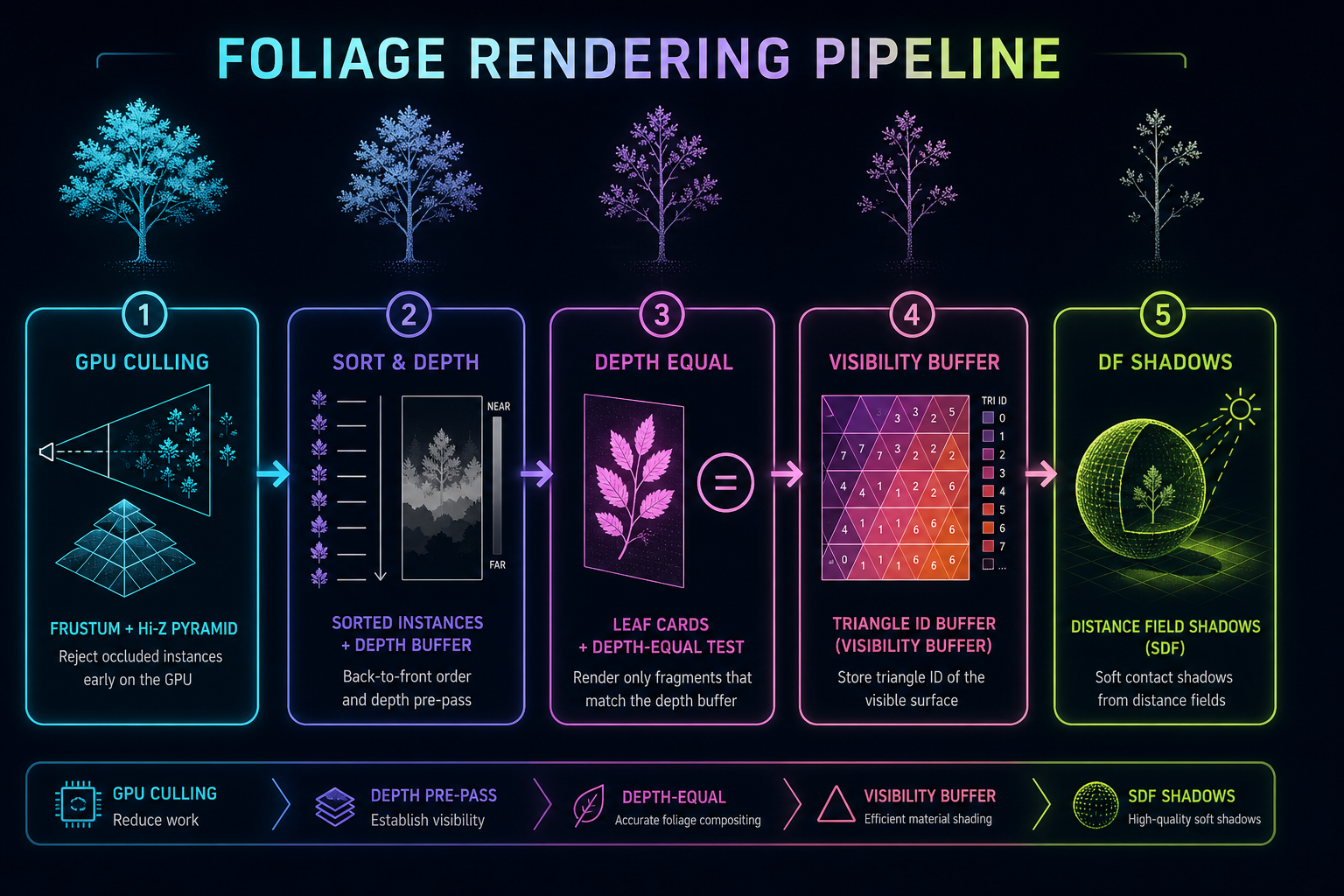
अच्छी खबर यह है कि यह एक हल हो चुकी समस्या है। इस मायने में नहीं कि किसी ने इसे एक ही trick से ठीक कर दिया, बल्कि इस मायने में कि सात या आठ techniques का एक stack है जो मिलकर एक घने जंगल में effective overdraw को 8-15x से घटाकर 1-2x कर देता है। हर आधुनिक engine इस stack का कोई न कोई रूप ship करता है। आइए देखें इसमें क्या है, हर टुकड़ा क्यों मौजूद है, और हर एक के canonical references क्या हैं।
1. Foliage overdraw इतना तकलीफदेह क्यों है
एक आम opaque scene में GPU early depth rejection करता है: pixel shader के चलने से पहले ही hardware मौजूदा depth buffer को देखता है और उन fragments को skip कर देता है जो पहले से किसी चीज़ के पीछे हैं। यह असल में मुफ्त है और यही घनी geometry की लागत को संभाले रखता है।
Alpha-tested foliage इसे तोड़ देता है। Fragment shader को असल में चलना पड़ता है ताकि alpha texture का मूल्यांकन हो और masked-out pixels पर discard (या clip) call हो। Hardware यह नहीं जान सकता कि कोई fragment मारा जाएगा या नहीं, जब तक shader चल न जाए, इसलिए ज़्यादातर GPUs पर किसी shader में कहीं भी discard का इस्तेमाल उस draw call के लिए early-Z को पूरी तरह बंद कर देता है। Tile-based GPUs (mobile, M-series, कुछ consoles) पर यह पूरे frame के लिए Hi-Z और depth compression को बंद कर सकता है। Pixel shader हर उस triangle के लिए एक बार चलता है जो किसी pixel को ढकता है, और उनमें से ज़्यादातर मूल्यांकन एक discard के साथ खत्म होते हैं।
एक ही screen pixel के सामने 10 leaf quads ढेर कर दें और leaf shader 10 बार चलता है। इसे 40 लाख pixels से गुणा करें और लागत क्रूर हो जाती है। Marco Salvi का लेख To Early-Z, or Not To Early-Z hardware स्तर पर यह क्यों होता है इसका सबसे सहज दौरा है, और अगर आपने पहले कभी इसके बारे में नहीं सोचा तो शुरुआत के लिए यही सही जगह है।
2. Masked geometry के लिए depth prepass
सबसे बड़ी अकेली जीत, और वह technique जो हर आधुनिक engine ship करता है, foliage draw को दो passes में बाँटना है। पहला pass सिर्फ़ depth लिखता है, एक न्यूनतम shader के साथ जो alpha test करता है, masked pixels को discard करता है, और और कुछ नहीं लिखता। दूसरा pass पूरे material को render करता है जिसमें depth testing "equal" पर सेट होता है और depth writes बंद होते हैं। अब हर दिखने वाला pixel पूरे BRDF को ठीक एक बार shade करता है, चाहे उसके पीछे कितने भी leaf quads ढेर हों।
यह दोगुना काम लगता है क्योंकि आप एक ही triangles को दो बार छूते हैं, लेकिन prepass shader इतना सस्ता है (एक texture sample, एक discard, एक depth write) कि main pass पर हुई बचत इस अतिरिक्त लागत को बौना कर देती है। एक घने जंगल में main pass पूरे leaf shader को प्रति pixel 10-15 बार चलाने से घटकर ठीक एक बार चलाने पर आ जाता है।
Unreal, Frostbite, Decima, और आधुनिक Rage तथा Dunia शाखाएं सभी यह करती हैं। यही वह मुख्य वजह भी है कि इन engines में masked materials अब भी translucent materials से सस्ते हैं।
गहराई में:
- Pettineo, To Early-Z, or Not To Early-Z (
discardHi-Z और early-Z के साथ कैसे interact करता है, इसका canonical लेख)। - Wihlidal, Optimizing the Graphics Pipeline with Compute (GDC 2016, Frostbite का depth-prepass और prepass-driven culling architecture)।
- Sanders, Between Tech and Art: The Vegetation of Horizon Zero Dawn (GDC 2018, Decima के two-pass foliage rendering के साथ)।
- Persson, A couple of notes about Z (depth-equal testing और prepass अर्थशास्त्र की अब भी सबसे साफ व्याख्याओं में से एक)।
3. आक्रामक LODs और octahedral imposters
दूसरी सबसे बड़ी जीत है पत्तों को बिल्कुल भी न draw करना जब आपको ज़रूरत न हो। Foliage assets कई LOD tiers के साथ ship होते हैं। सबसे नज़दीकी अलग-अलग leaf cards वाला पूरा mesh होता है। मध्यम दूरी पर पत्ते घने composite cards में सिमट जाते हैं (30 पत्तों का गुच्छा एक ही silhouette वाला 1 textured card बन जाता है)। एक दूरी की सीमा से परे, पूरा पेड़ एक imposter बन जाता है: geometry का एक छोटा टुकड़ा जो पेड़ के कई कोणों से pre-rendered views से textured होता है।
आधुनिक imposter format है octahedral imposter: geometry का एक 8-फलकीय टुकड़ा जो octahedral mapping का इस्तेमाल करके एक sphere के points से कैद किए गए views के atlas से textured होता है। Runtime पर shader camera direction के आधार पर सबसे नज़दीकी दो या तीन pre-rendered views चुनता है और उनके बीच blend करता है। नतीजा कुछ-triangle का एक stand-in होता है जो हर कोण से 3D दिखता है और इसमें सही shading, normal maps, और यहां तक कि wind animation हो सकता है। Ryan Brucks का implementation, जो मूल रूप से एक community plugin था और अब Unreal का हिस्सा है, यहां reference है। Microsoft Flight Simulator के अरबों-पेड़ वाले जंगल असल में camera को छोड़कर हर जगह octahedral imposters हैं।
बड़ी संरचनात्मक जीत यह है कि imposters दूरी पर opaque या लगभग-opaque होते हैं। 30-पत्ते वाला composite card 30 quads के बजाय एक ही masked quad है। पूरे-पेड़ का imposter कुछ फलक है, हज़ारों नहीं। Far-field overdraw लगभग शून्य पर सिमट जाता है।
गहराई में:
- Brucks, Octahedral Impostors (canonical reference, math और UE implementation के साथ)।
- Halen, Octahedral Impostors in Unreal Engine (एकीकृत UE workflow)।
- Häggström, Real-Time Rendering of Vegetation (LOD chains, imposters, और उनके पीछे के math को कवर करने वाला एक साफ thesis)।
- Crytek, SpeedTree integration in CryEngine 3 (GPU Gems 3, अब भी tree LOD chains पर सबसे अच्छा primer)।
4. Cluster और GPU-driven culling
depth prepass के बावजूद, prepass की खुद की एक लागत होती है: इसे अब भी हर दिखने वाले (या संभावित रूप से दिखने वाले) पेड़ के हर triangle को छूना पड़ता है। आधुनिक engines उस लागत को GPU-driven cluster culling से नीचे धकेलते हैं, जो rasterizer के देखने से पहले ही triangles के पूरे समूहों को फेंक देता है।
Pipeline ऐसा दिखता है: हर mesh को 64 या 128 triangles के clusters में पहले से बाँट दिया जाता है, जिनके पास एक tight bounding box और normals का एक cone होता है। Render time पर एक compute shader instance list पर चलता है, हर instance का frustum-test करता है, फिर हर दिखने वाले instance के हर cluster का frustum-test करता है, फिर हर बचे हुए cluster का पिछले frame के depth pyramid के विरुद्ध Hi-Z occlusion-test करता है। पेड़ों की पूरी शाखाएं जो किसी पहाड़ी के पीछे या किसी दूसरे पेड़ के सामने छिपी हैं, किसी भी vertex shader के चलने से पहले cull हो जाती हैं। Output "इन clusters को draw करो" arguments की एक compact list होती है जो सीधे एक ही DrawIndirect call में दी जाती है।
यही वह चीज़ है जो 10,000 पेड़ों के जंगल को सेकंडों के बजाय milliseconds में render कराती है। Ubisoft की Assassin's Creed Unity talk ने इस pipeline को production रूप में पेश किया (20-40% triangles culled, 30-80% shadow triangles culled, पिछली पीढ़ी की तुलना में screen पर 10x ज़्यादा instances), और Wihlidal की Frostbite talk ने इसे और आगे ले गई। UE5 Nanite इस दिशा का दिखने वाला अंतिम रूप है: pixel तक cluster culling।
गहराई में:
- Haar और Aaltonen, GPU-Driven Rendering Pipelines (SIGGRAPH 2015, मूलभूत Assassin's Creed Unity talk)।
- Wihlidal, Optimizing the Graphics Pipeline with Compute (GDC 2016, Frostbite का GPU-driven prepass)।
- Karis, Stubbe, Wihlidal, A Deep Dive into Nanite Virtualized Geometry (SIGGRAPH 2021, meshlet granularity पर cluster culling)।
- Liktor, Geometry Rendering Pipeline Architecture at Activision (cluster culling का Call of Duty संस्करण, 2021)।
5. Front-to-back instance और cluster sorting
एक बार prepass अपना काम कर रहा हो, तो क्रम मायने रखने लगता है। Prepass depth लिखता है, लेकिन सिर्फ़ उन fragments के लिए जो alpha test पास करते हैं। अगर आप जंगल का पिछला हिस्सा पहले और अगला हिस्सा आखिर में draw करें, तो हर front fragment एक back fragment को overwrite करता है, और prepass shader फिर भी back के लिए चलता है। अगर आप front-to-back draw करें, तो हर अगला draw छोटे values के साथ depth buffer को और भरता है, और Hi-Z shader के चलने से पहले back fragments को और-और ज़्यादा reject कर देता है।
यही वजह है कि लगभग हर आधुनिक engine prepass जारी करने से पहले foliage instances को camera से दूरी के हिसाब से sort करता है। Sort सस्ता है (radix sort का इस्तेमाल करके GPU पर कुछ लाख instances), और यह prepass को खुद ही self-pruning operation में बदल देता है। Cluster-level culling इसी वजह से meshlet granularity पर sort करता है। Depth prepass और front-to-back ordering वह जोड़ी है जहां हर एक अच्छा है और दोनों का मेल शानदार है।
गहराई में:
- Persson, Depth in-depth (depth-buffer ordering, prepass अर्थशास्त्र, और Hi-Z व्यवहार पर architectural notes)।
- Giesen, A trip through the graphics pipeline (Hi-Z reject rate draw order पर कैसे निर्भर करता है इसकी गहरी तकनीकी व्याख्या)।
- Wihlidal, Optimizing the Graphics Pipeline with Compute (GDC 2016, Frostbite का GPU-side instance sort शामिल है)।
6. Dithered LOD transitions और hashed alpha
दूसरा बड़ा जाल है fading। दो LODs के बीच transition करने का (या camera के पास आने पर किसी instance को fade in या out करने का) भोला तरीका alpha blending है। लेकिन blended geometry depth buffer में नहीं लिख सकती, जो हर fading पेड़ को धीमे translucent path में धकेल देता है और prepass को तोड़ देता है। हल है geometry को masked path में रखना और fade को alpha test के अंदर करना।
दो मुख्य techniques:
- Dithered LOD transitions एक 4x4 या 8x8 Bayer pattern (या एक screen-space blue-noise texture) sample करती हैं और उसे प्रति-pixel cutoff modifier के रूप में इस्तेमाल करती हैं। 50% blend वाले पेड़ में बचे हुए pixels का एक checkerboard होता है; गायब pixels अगले LOD के पूरक checkerboard से भर जाते हैं। TAA दो या तीन frames में checker को एक smooth blend में हल कर देता है। सस्ता, स्थिर, engine की हर बाकी चीज़ के साथ blend होता है।
- Hashed alpha testing (Wyman & McGuire, I3D 2017) तय 0.5 alpha threshold की जगह [0,1) में एक प्रति-pixel hashed threshold रखता है। दूर की alpha geometry जो सामान्यतः पूरी तरह गायब हो जाती (क्योंकि mipmapped alpha 0.5 से नीचे चला जाता है) बचे हुए pixels का एक स्थिर बिखराव बनाए रखती है। TAA फिर से सफाई करता है।
दोनों techniques foliage को opaque/masked path में रखती हैं जहां depth prepass काम करता है, इसलिए किसी चीज़ को सिर्फ़ fade in करने के लिए आपको पूरी translucent rendering लागत नहीं चुकानी पड़ती। Alpha to coverage इसी विचार का MSAA-युग वाला रिश्तेदार है: alpha को एक sub-pixel coverage mask में बदलो, masked path छोड़े बिना आंशिक transparency पाओ। पेच यह है कि A2C असल में सिर्फ़ MSAA के साथ चमकता है, जिसे ज़्यादातर आधुनिक deferred renderers अब इस्तेमाल नहीं करते।
गहराई में:
- Wyman और McGuire, Hashed Alpha Testing (I3D 2017, canonical hashed-alpha paper)।
- Castaño, Computing Alpha Mipmaps (The Witness blog, alpha-tested textures को mip करने का सही तरीका ताकि दूर के पेड़ गायब न हों)।
- Yuksel, Alpha Distribution for Alpha Testing (alpha mipmaps पर एक और हालिया सुधार)।
- NVIDIA, Anti-Aliased Alpha Testing (A2C, hashed alpha, और dithered विकल्पों का एक survey)।
7. Masked pixels पर shading लागत घटाना
एकदम सही prepass और एकदम सही culling के बावजूद, आपको अब भी हर दिखने वाले foliage pixel को एक बार shade करना पड़ता है। Engines वह लागत भी घटाते हैं:
- सस्ता BRDF। Foliage matte होता है और इसे असल में पूरे Cook-Torrance specular path की ज़रूरत नहीं। एक wrapped-Lambertian diffuse और एक एक-लाइन specular अनुमान काफी है।
- कम-frequency normal maps। पत्ते पहले से ही noisy हैं। एक 256x256 normal map आम viewing distances पर 1024x1024 जैसा ही दिखता है और bandwidth बचाता है।
- No parallax, no anisotropy, no clearcoat। पत्तों के लिए PBR feature menu बंद कर दिया जाता है।
- Two-sided thin transmission पूरे subsurface scattering के बजाय। पत्ते पीछे से रोशनी transmit करते हैं, लेकिन आप इसे एक ही back-light dot product से नकली बना सकते हैं।
- कुछ engines में Half-resolution shading। Foliage को 1/4 या 1/2 pixel rate पर shade किया जाता है और upscale किया जाता है। TAA का stochastic noise resampling को छिपा देता है।
- masked materials पर default रूप से detail textures और decals को skip करें।
इनमें से हर एक अकेले एक छोटी जीत है। मिलकर, masked-foliage shaders समकक्ष opaque material से 2-3x तेज़ चल सकते हैं।
गहराई में:
- Lagarde और de Rousiers, Moving Frostbite to Physically Based Rendering 3.0, foliage और translucency पर sections (SIGGRAPH 2014, thin two-sided materials के लिए canonical PBR adjustments)।
- Jimenez, Next Generation Character Rendering (wrapped-Lambertian और back-translucency math, मूल रूप से त्वचा के लिए पर पत्तों में व्यापक रूप से port किया गया)।
- Sanders, Between Tech and Art: The Vegetation of Horizon Zero Dawn (GDC 2018, Decima के foliage shader सरलीकरणों के साथ)।
8. Masked materials के लिए visibility buffers और Nanite
overdraw का सबसे साफ जवाब है shading को rasterization से पूरी तरह अलग कर देना। एक visibility buffer geometry को एक पतले buffer में rasterize करता है (प्रति pixel सिर्फ़ triangle ID और instance ID), फिर पूरे material को एक deferred pass के रूप में चलाता है जो visibility buffer पढ़ता है और हर pixel को ठीक एक बार shade करता है। संरचना के हिसाब से ही, shading stage पर कोई overdraw नहीं होता। Burns और Hunt के 2013 के paper ने यह पेश किया; UE5 Nanite production-quality साकार रूप है, जिसमें UE 5.5 से masked foliage भी शामिल है।
Nanite का मोड़ यह है कि यह cluster-level virtualized geometry के साथ ऐसा करता है, इसलिए rasterizer खुद sub-pixel triangles के लिए एक software path पर चलता है और overdraw को सीमित रखता है। Nanite में masked materials को "programmable raster" feature की ज़रूरत होती है: alpha test visibility-buffer pass के दौरान चलता है, लेकिन material shading अब भी deferred resolve में प्रति दिखने वाले pixel एक बार होती है। नतीजा यह कि बहुत घना Nanite foliage, जो कभी masked materials पर धीमा होने के लिए बदनाम था, अब opaque के बराबर या उससे भी सस्ता है, क्योंकि shading समय पर overdraw शून्य है। एक tradeoff है: अक्सर low-poly masked-card पेड़ों को रखने के बजाय high-poly opaque tree geometry को Nanite से धकेलना बेहतर होता है, क्योंकि masked path programmable-raster लागत जोड़ता है।
गहराई में:
- Burns और Hunt, The Visibility Buffer: A Cache-Friendly Approach to Deferred Shading (JCGT 2013, मूल paper)।
- Karis, Stubbe, Wihlidal, A Deep Dive into Nanite Virtualized Geometry (SIGGRAPH 2021, production architecture)।
- Epic, Nanite GPU Driven Materials (GDC 2024, masked-material और programmable-raster pipeline के साथ)।
- Notes from "Nanite GPU Driven Materials" (उसी talk का एक साफ तीसरे-पक्ष का walkthrough)।
9. Foliage के लिए अलग shadow representations
Alpha-tested foliage के लिए shadow maps किसी भी open-world frame में दूसरी सबसे महंगी shadow समस्या है, बड़े cascades के बाद। हर cascade को अपने depth prepass की ज़रूरत होती है, हर prepass alpha test चलाता है, और लागत 4 cascades और दर्जनों light frusta में तेज़ी से ढेर हो जाती है। इसलिए ज़्यादातर engines foliage shadows को उस तरह render नहीं करते जैसे वे foliage color render करते हैं।
आम विकल्प:
- Mesh distance-field shadows (UE Lumen, custom engines)। हर mesh के पास एक precomputed signed distance field होता है। SDF के बीच से एक छोटा cone trace alpha-tested mesh को छुए बिना एक soft shadow देता है। पेड़ों के लिए खास तौर पर अच्छा क्योंकि SDF canopy silhouette को एक ही ठोस blob के रूप में कैद करता है और प्रति-पत्ता detail को नज़रअंदाज़ कर देता है।
- Foliage के लिए कम-resolution cascades। Foliage shadows एक half-resolution slice में जाते हैं और edge-aware filtering के साथ up-sample होते हैं। आंख resolution गिरावट को नहीं देखती क्योंकि shadows पहले से ही soft हैं।
- MSAA के साथ alpha-to-coverage shadow maps। जिन engines के shadow path में अब भी MSAA है, उन पर A2C पूरी alpha test लागत के बिना smooth-edged foliage shadows देता है।
- तने और बड़ी शाखाओं के लिए capsule shadows, canopy के लिए distance-field, पूरी alpha test सिर्फ़ सबसे नज़दीकी cascade पर। अलग-अलग दूरियों के लिए अलग-अलग representations, lighting pass में blend।
- WPO disable distance। Wind-driven World Position Offset एक threshold से परे मार दिया जाता है ताकि cached shadow data frames में valid रहे। UE के Virtual Shadow Maps इस पर बहुत भरोसा करते हैं।
गहराई में:
- Epic, Distance Field Soft Shadows in Unreal Engine (mesh DF shadows के लिए canonical UE reference)।
- Wright, Lumen: Real-Time Global Illumination in Unreal Engine 5 (SIGGRAPH 2022, foliage के लिए Lumen के mesh-SDF integration के साथ)।
- Epic, Virtual Shadow Maps (आधुनिक UE5 shadow architecture, foliage-विशिष्ट WPO disable और caching नियमों के साथ)।
- Persson, Practical Cascaded Shadow Maps (अब भी canonical CSM reference, alpha-tested casters पर notes के साथ)।
10. Wind, animation, और shadow caching
एक सूक्ष्म संबंधित समस्या: ज़्यादातर foliage हिलता है। Wind-driven vertex animation (UE में World Position Offset, Frostbite और Decima में समकक्ष) का मतलब है कि foliage geometry frame दर frame स्थिर नहीं रहती, जो shadow caching और reprojection को तोड़ देता है। आधुनिक engines इससे दो तरीकों से लड़ते हैं:
- दूरी पर WPO को सीमित करें। एक threshold से परे wind animation का amplitude सहजता से शून्य हो जाता है। आंख वैसे भी उतनी दूर के झूलने को नहीं देख सकती, और shadow caches valid रहते हैं।
- Wind को cluster bounds में bake करें। Cluster bounding boxes अधिकतम WPO offset से फुला दिए जाते हैं ताकि culling बिना प्रति frame re-upload के conservative बनी रहे।
- Per-instance phase offsets। एक जैसे पेड़ wind phase को offset करने के लिए एक प्रति-instance random seed का इस्तेमाल करते हैं, ताकि एक जंगल प्रति पेड़ अलग animation की कीमत चुकाए बिना एक साथ कदम-से-कदम न झूले।
यह वह तरह का detail है जो technique lists में नहीं दिखता पर असल में 3 ms जंगल और 9 ms जंगल के बीच का फर्क है।
गहराई में:
- Sanders, Between Tech and Art: The Vegetation of Horizon Zero Dawn (GDC 2018, Decima wind-animation pipeline और shadow caching के साथ)।
- McAuley, Rendering the World of Far Cry 4 (GDC 2015, vegetation के लिए wind-grid sampling शामिल है)।
- Epic, Foliage and Virtual Shadow Maps (WPO disable distance और VSM caching पर UE5 community मार्गदर्शन)।
11. संयुक्त गणित
इनमें से कोई trick रामबाण नहीं है। दिलचस्प बात यह है कि जब आप इन्हें एक के ऊपर एक रखते हैं तो क्या होता है:
- एक घने जंगल scene पर एक भोला masked-foliage pass 8-15x effective overdraw मापता है। हर दिखने वाला pixel leaf shader को 8 से 15 बार चलाता है।
- एक depth prepass जोड़ें और main pass ~1x overdraw पर गिर जाता है, पर prepass खुद अब भी सब कुछ छूता है।
- Front-to-back sorting जोड़ें और prepass खुद को pruning करने लगता है।
- Cluster-level GPU culling जोड़ें और prepass सिर्फ़ उसे छूता है जो संभवतः दिख सकता है।
- LOD chains और imposters जोड़ें और 30 m से परे दिखने वाले quads की संख्या एक अंक के क्रम से गिर जाती है।
- Visibility-buffer / Nanite path जोड़ें और shading stage घने overlap पर भी सचमुच प्रति pixel एक बार चलता है।
- Distance-field shadows जोड़ें और shadow लागत alpha test के साथ scale करना बंद कर देती है।
मुख्य नतीजा, जो ऊपर लिंक की गई talks में बार-बार दोहराया गया है: effective overdraw 8-15x से 1-2x में सिमट जाता है, और एक घने जंगल scene में कुल foliage frame लागत 4-6x गिर जाती है। यही पूरी वजह है कि आधुनिक open-world games consumer hardware पर जंगलों को 60+ fps पर render कर सकते हैं।
12. Browser के लिए इसका क्या मतलब है
इस stack का ज़्यादातर हिस्सा WebGPU पर साफ-साफ map होता है। हम पहले ही open-world browser engine में GPU-driven culling, indirect dispatch, Hi-Z occlusion, और front-to-back sorted prepasses ship कर चुके हैं। Masked geometry के लिए depth prepass सीधा है: WebGPU fragment shaders में depth-equal testing और discard का समर्थन करता है, early-Z को लेकर उन्हीं चेतावनियों के साथ। Octahedral imposters यांत्रिक रूप से port होते हैं, math बस sphere-to-octahedron unwrapping और atlas indexing है।
मुश्किल टुकड़े आधुनिक वाले हैं। WebGPU में एक visibility buffer का मतलब है एक render target में 32-bit triangle ID लिखना और एक fullscreen compute pass में materials को resolve करना; building blocks मौजूद हैं पर orchestration जटिल है। Mesh distance-field shadows प्रति asset एक 3D texture और एक छोटा cone trace चाहते हैं, दोनों WebGPU की पहुंच में हैं। Hashed alpha और dithered LODs हर एक एक shader function हैं।
Browser foliage के लिए आगे का रास्ता वही है जो इस stack में बाकी हर चीज़ के लिए है: सस्ते, मज़बूत टुकड़े पहले ship करो (prepass, sorted instances, LODs, imposters, hashed alpha) और भारी मशीनरी (visibility buffer, mesh-SDF shadows) उसके ऊपर जोड़ो। Browser hardware का floor आखिरकार इतना ऊंचा है कि कोई architectural वजह नहीं कि एक WebGPU जंगल किसी console जैसे न दिखे और न चले। बस engineering वजहें हैं, और engineering वजहें वही हैं जो हमें पसंद हैं।
पूरे stack में आगे पढ़ने के लिए
अगर आप एक ऐसा source चाहते हैं जो यह सब एक साथ खींच लाए, तो SIGGRAPH "Advances in Real-Time Rendering in Games" archive (advances.realtimerendering.com) में 2014 तक की canonical foliage और GPU-driven-rendering talks हैं। Adrian Courrèges के GPU profiling articles में GTA V और Horizon Zero Dawn के frame-by-frame breakdowns हैं जो यहां चर्चित हर pass को production क्रम में दिखाते हैं। खास तौर पर alpha-test math के लिए, Chris Wyman के research page पर reference shaders के साथ hashed-alpha और stochastic-transparency papers हैं। और Real-Time Rendering, 4th edition के transparency, sampling, और depth handling पर अध्याय अब भी पाठ्यपुस्तक की शुरुआती जगह हैं।