Game of the Day
Gorse Roll: fragile cargo
Glass melts ice, steel resists a shove and cork rides the breeze. Gorse Roll gives its marble racer three materials and a course editor to experiment with.
A marble cannot change its mind halfway across a gap. Gorse Roll has no jump button and no steering in mid-air. Line up the run, leave the ledge, and the landing belongs to the speed you brought with you. The rotating roads add a further indignity: sometimes the floor supplies the shove.
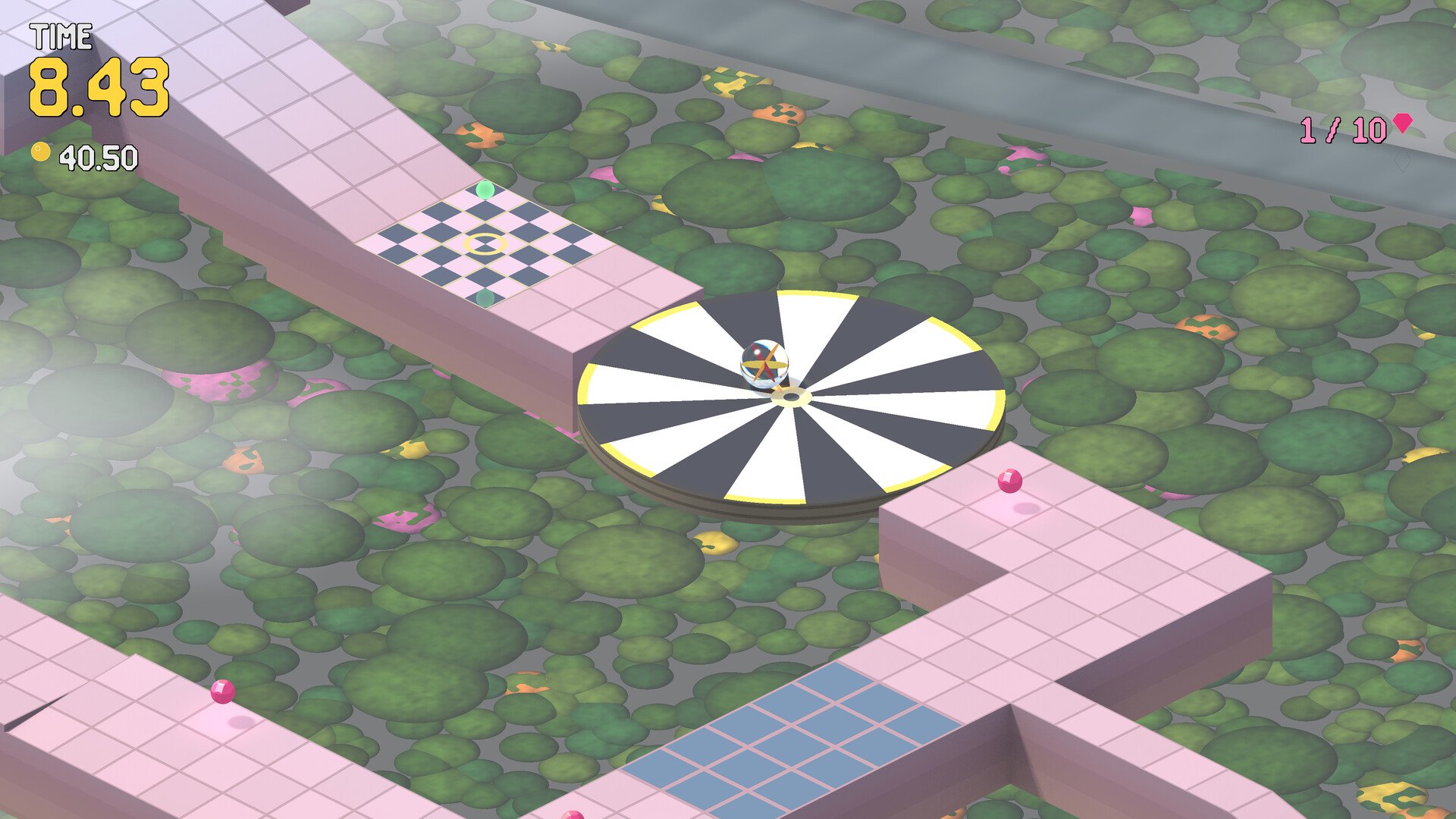
Oliver Lenz's marble racer builds its courses from broad tiled platforms, narrow connections and conspicuously absent safety rails. The official gameplay trailer shows a cork ball riding a wooden cross as it turns over the treetops. You have to get aboard, stay aboard, then leave when an arm meets the next piece of road. Simply aiming at the exit would miss most of the problem.
Three ways to roll
Glass, steel and cork give the same obstacle different answers. Glass is quick and vulnerable to long falls. Steel tolerates bigger drops and resists the creatures that try to knock you away. Cork floats in deep water and rides air currents, but its lightness also makes it easier to send flying. Rings along the course change the marble's material.
Those properties give route planning something substantial to work with. A vent that carries cork up a wall is little help to steel. Glass has a task of its own: settle it on a sun plate and it concentrates the light to melt the matching ice barrier. The ball you want for a fast stretch may be the wrong one for what follows.
The game's manual distinguishes rings placed side by side, where the player chooses, from a row across the road that supplies the required material. A course with alternatives lets you weigh an awkward route against a change of ball. A compulsory transformation can teach a new obstacle, but repeated too often it would reduce the decision to following instructions.
Journey gives you room to learn a route without a countdown ending the attempt. Medals encourage quicker runs, while gems shave time off the result. Time Trial adds your best run as a ghost. Arcade applies the harder pressure of a dwindling clock across a whole world. The same course can be explored at leisure, rehearsed for a medal, then tackled with a deadline.
Glass with a job to do
The marble is unusually handsome. In the footage, its coloured centre sits inside a clear shell, and the shiny floor produces a second ball beneath it. The pink roads and black-and-white discs keep the stages readable against the mottled forest below. It looks like a tabletop toy suspended somewhere deeply unsuitable for small, breakable objects.
In the developer's account of the renderer, the reason for ray tracing is quite specific: glass should bend the pattern underneath it and cast a little rainbow. The work runs on the CPU, with no ray-tracing graphics card required. Resolution still matters. The developer recommends lowering it if a large fullscreen view stutters, so the free demo is a useful check on your own machine.
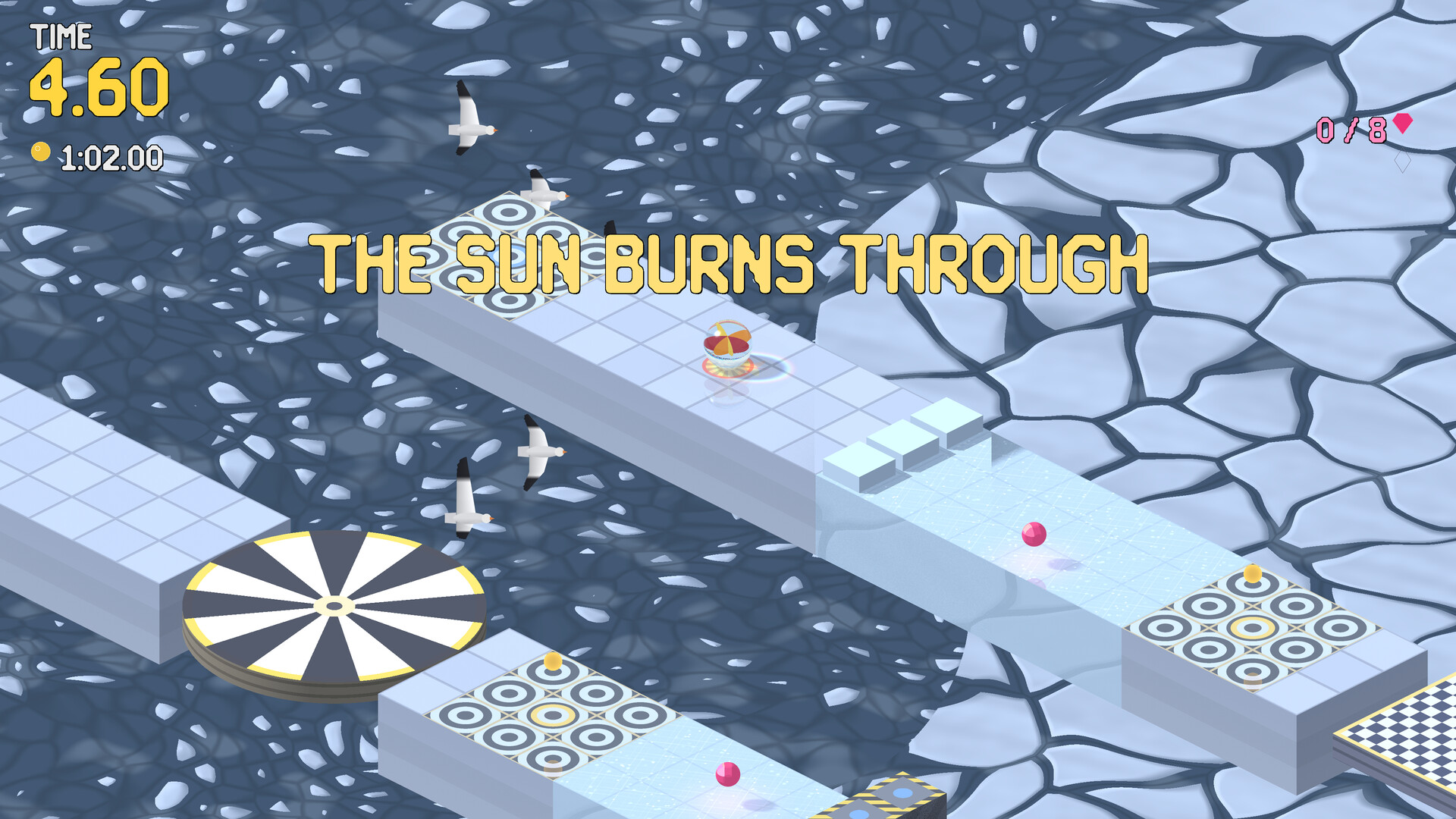
The course editor exposes a less glamorous part of the design. Its manual recommends walls beyond jumps to catch overshoots, and warns that a ledge close to the camera can hide the marble. With no mid-air correction, the landing needs to be visible before take-off. A nasty gap can test judgment. An obscured one makes the player guess.
The trailer's editor sequence places a loop at the foot of a ramp, then sends the marble through it. Moving from laying track to testing a run is a good fit for a game about momentum. The included courses also give would-be designers something to take apart, and course files can be shared as plain text. There is room here for the player who spends longer adjusting a ramp than racing it.
Gorse Roll released on November 22 for Windows, with Windows 11 listed as the minimum operating system. The full game costs $9.99 on the US Steam store as checked on November 28 and includes 42 courses. The free Windows demo on itch.io contains the first world's six courses and its bonus course.