Game of the Day
Swarmbreaker: let them bunch up
Alien bugs pour through Swarmbreaker's canyons. Clever defenses turn the crush to your advantage, while vulnerable oil pumps put a price on every breach.
An oil pump does two jobs in Swarmbreaker. It keeps the money coming in, and it gives the insects somewhere inconvenient to go. Your ship might be safely tucked behind a killing ground while a valuable pump sits halfway up the canyon, attracting a crowd. Saving the base is only part of the work. Saving the business takes better planning.
Paracorn's tower defense game, released on November 18, gives its alien invasion a wonderfully unpleasant density. Bugs push into gaps, gather around machinery, and squeeze past obstacles. A busy passage becomes a dark, writhing rope. The attraction is easy to see: put enough bodies in a confined space and the shape of that space starts to matter enormously.
The pump comes first
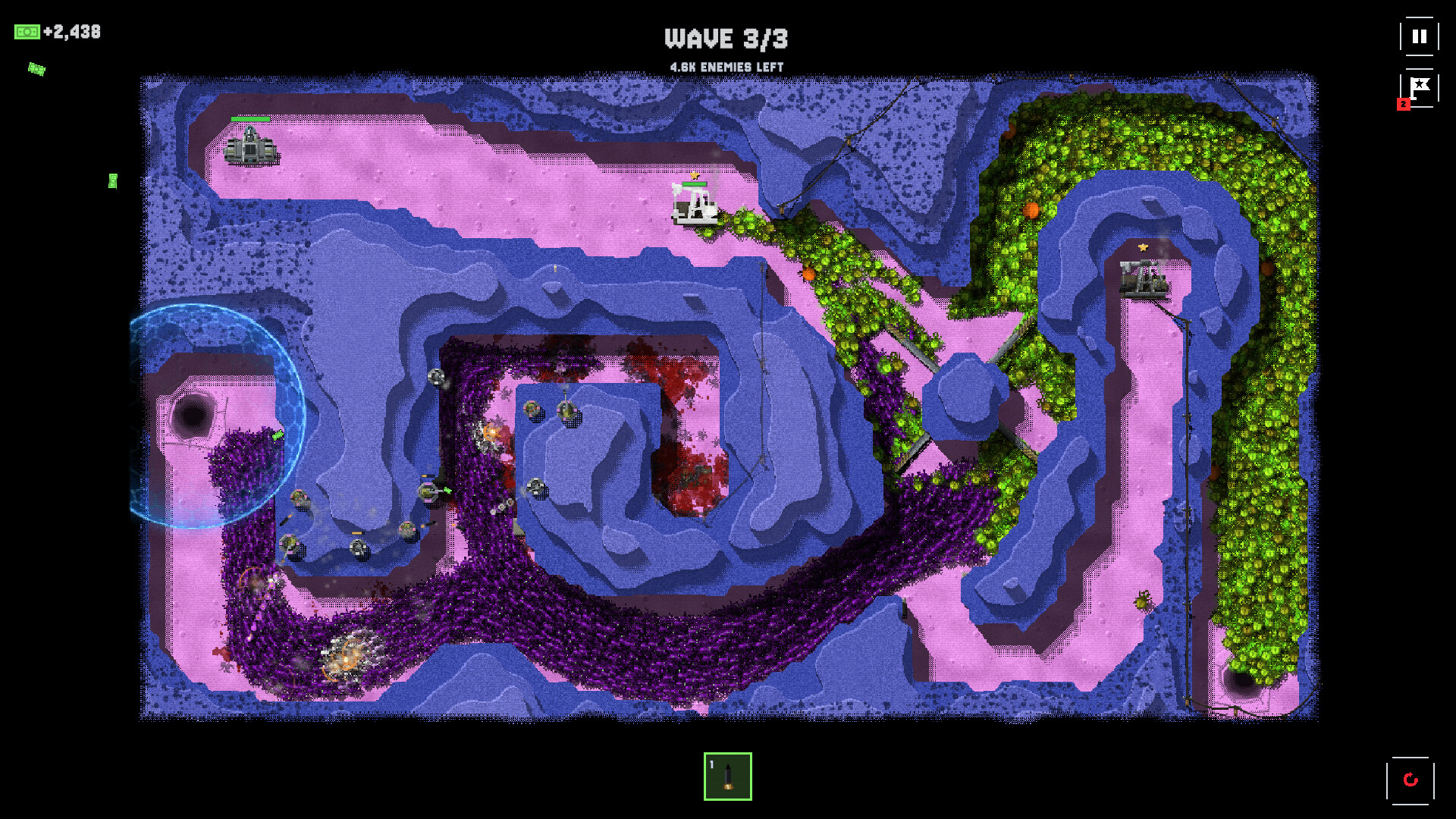
The opening of the browser demo, version 1.2.1, makes the economic stakes unusually clear. Each working pump adds 25 percent to the money earned from kills. Keep it alive through the level and it also supplies a star for buying new equipment. Destroyed pumps stay destroyed between waves. A careless opening can leave the rest of the level operating on a smaller budget.
That first defense is modest: one gun, one length of hedgehogs, and a channel with several bends. The gun belongs on rock and fires into an aimed arc. The hedgehogs go on open ground, slowing the swarm as it passes. Their relationship is the useful part. Time spent struggling through an obstacle has value when a weapon can use it. A well-defended patch of empty canyon earns very little.
The opening demo run cleared its first wave with two pumps lost. The results screen was admirably blunt about the cost, then broke down the damage by weapon. Pump explosions had done most of the killing. That is a splendidly rude report card: victory, largely financed by the destruction of the things you were supposed to protect.
It also supplies a reason to try a different arrangement. Damage totals make a misplaced gun easier to diagnose. The upgrade tree offers a full refund, and individual purchases can be undone with a right-click. The demo's money went into an extra hedgehog slot, came back out, then bought gun damage. Experimentation already has a practical foundation here.
A crowd with weight
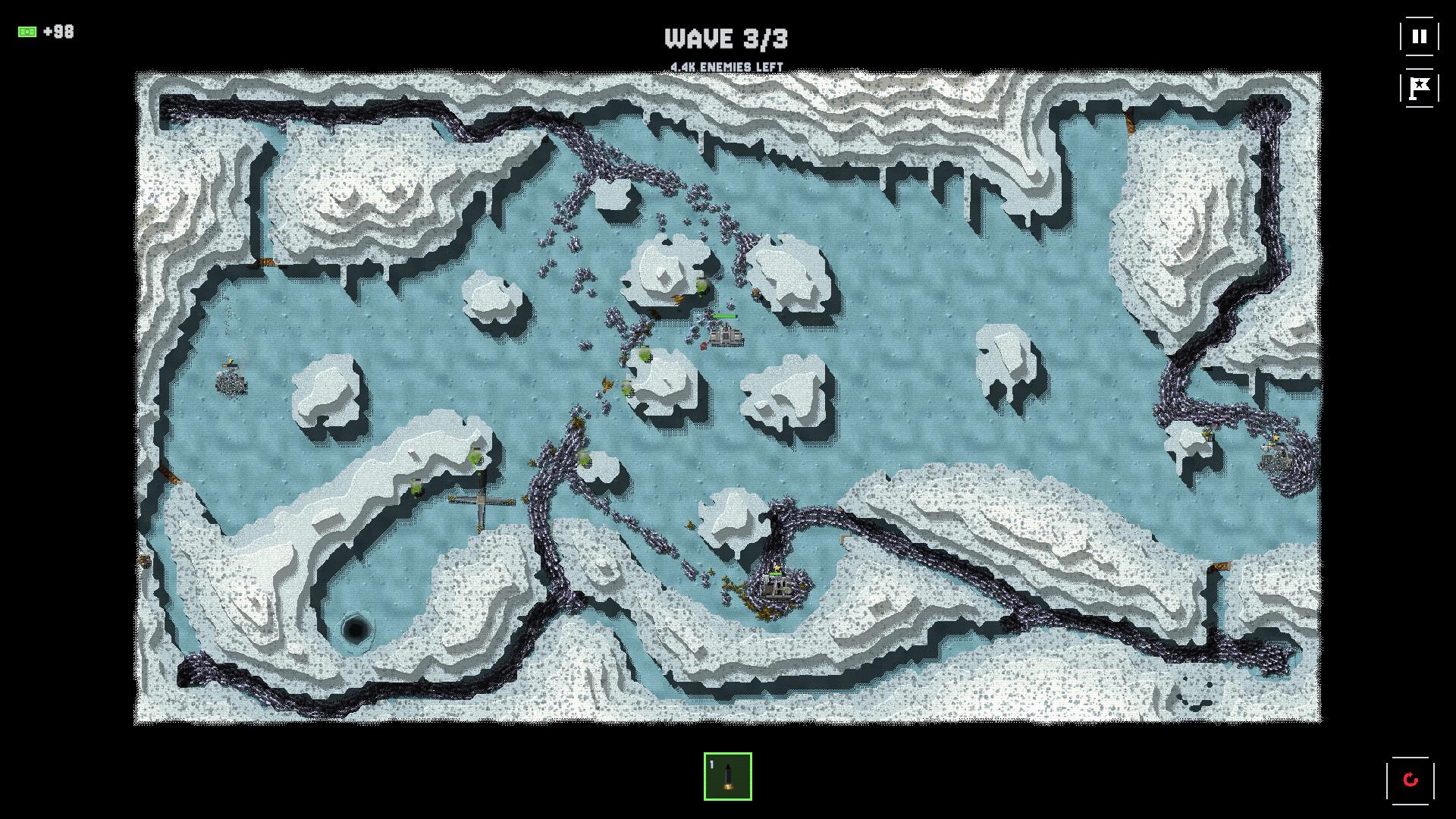
The swarm earns its billing in Paracorn's short physics demonstration. A stream approaches a field of rocks, widens around the obstructions, and collects around a pump at the far end. Individual insects remain visible along the edges. In the thick of it, they become a moving mass whose outline tells you where the pressure is building.
That gives the battlefield an appealing physical vocabulary. A gap, a bend, and a broad clearing suggest different problems before a damage statistic enters the conversation. Turrets need useful rock beside those routes. Barriers compete for the ground the insects occupy. The art helps sell the distinction, with raised shelves casting heavy shadows over the channels below.
The released game's arsenal extends to chain lightning and gravity fields, while flying enemies and shield-bearing Wardens complicate the business of concentrating everything in one convenient place. Those additions fit the premise. A crowd is an opportunity for weapons that affect several targets, but protecting the crowd or avoiding its route can upset that calculation.
The price of another attempt
The difficult balance is between improving a plan and paying for it. In a November 19 Steam review, player nuggnugg praises the towers and upgrade tree but describes later progress becoming too dependent on repeating maps for money. Their complaint is specific: even after redistributing upgrades for a particular battlefield, the available cash can become the limiting factor. They also find the difficulty uneven across the later maps.
Another launch player reports finishing in about six and a half hours without tackling the challenges or exhausting the arsenal. That account also warns returning demo players that familiar levels now call for different strategies. These are early individual reports, but they identify the question that matters: how often does a failed defense invite a better idea, and how often does it send you back to earn a larger allowance?
The release is already becoming easier to experiment with. Paracorn's November 19 build-set update lets players copy an existing setup into an empty slot and alter the copy independently. On a level, it carries over placed towers too. For a game about small positional changes, preserving a working defense while testing a variation is a worthwhile convenience.
Swarmbreaker suits players who enjoy adjusting a defensive layout and watching the consequences spread across the map. The possibility of repeated money runs deserves more caution from anyone seeking a tightly rationed sequence of puzzles.
Seeing through the swarm
Clarity matters just as much as spectacle. The 1.3.2 patch addresses blurry text, enlarges several interface labels, and gives burning bugs clearer flames and a yellow flicker. It also moves their rendering to the GPU after napalm-heavy scenes caused slowdowns. That is a developer-reported improvement, with hardware and battle conditions still deciding the result.
The useful design lesson is in the combination. A battlefield crowded with tiny enemies needs readable states as well as enough frames to display them. If fire, regeneration, shields, and routes compete for attention, the player needs to distinguish them quickly enough to change the defense. Swarmbreaker's rolling mass is its best advertisement. Keeping that mass intelligible is essential to making it a good strategy game.
The full game is available for Windows and macOS at a regular US Steam price of $9.99, with a $7.99 launch offer checked on November 20. There is a free Steam demo as well as the older browser build. Start with the pumps. They are expensive things to learn from.