Milki Delivery: the art of the milk round
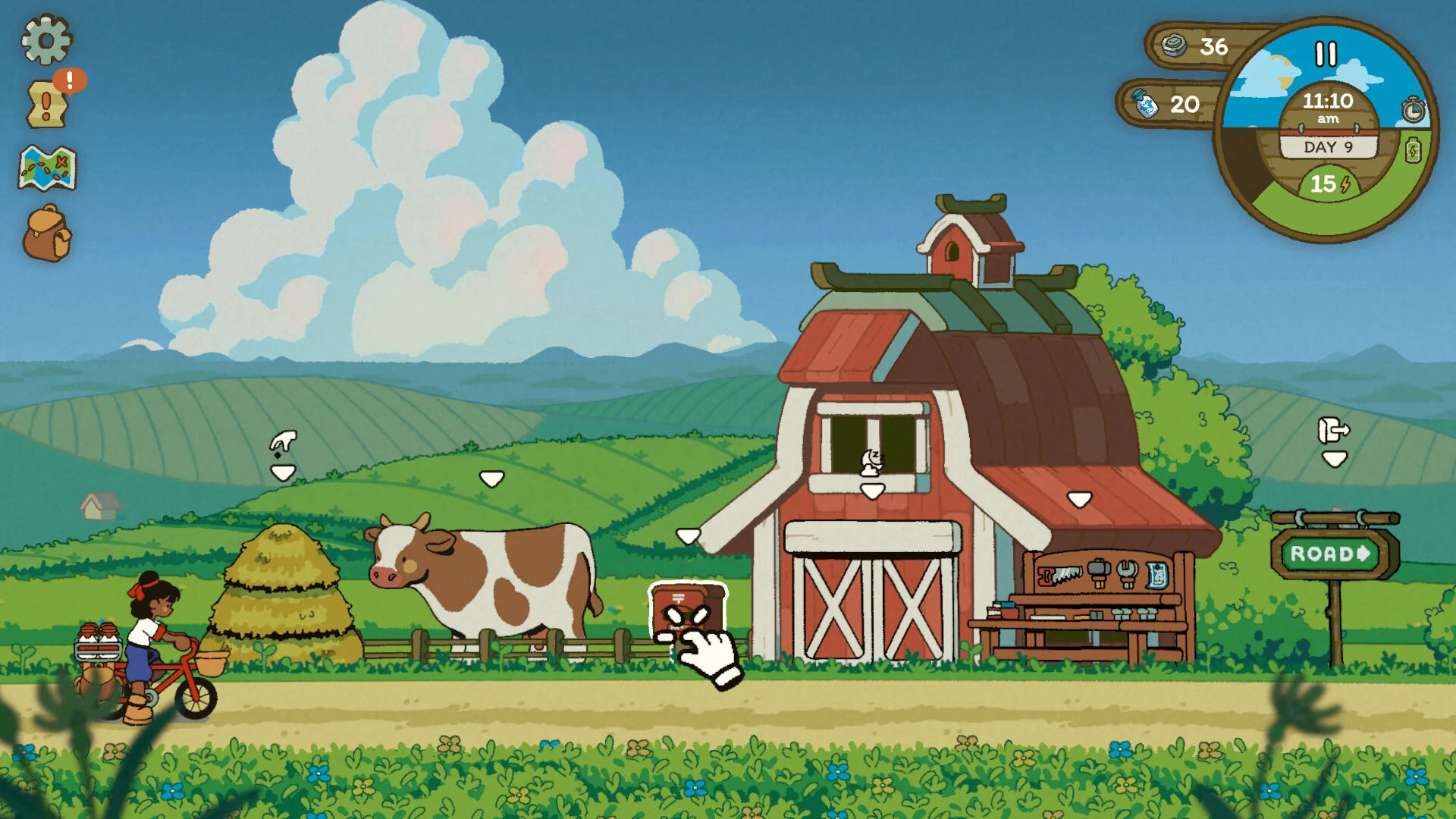
Milki Delivery's business plan begins with a hungry cow. Before Neha can load her bicycle and make the rounds, Milki needs breakfast. There are bottles to fill, neighbors to visit, and only so much daylight to fit them into. The countryside may look like a holiday, but somebody still has to bring the milk.
Blibloop and Doot, the pair behind Minami Lane, have built their new adventure around that modest obligation. Neha arrives in Nodoka Fields hoping to find a friend for her cow. The other cows have disappeared. A delivery service supplies a reason to knock on doors, meet the remaining residents, and gradually find out what happened to the place.
Breakfast before business
The browser demo's opening makes the first transaction wonderfully plain. Select one portion of hay and the feeding screen previews one bottle. Increase the portion to two and the bottle count follows. Neha stands beside Milki, brushing her, while the numbers change. A production menu has become a small act of care, with its arithmetic still visible.
The released game's feeding system adds ingredients and flavored milk to that arrangement. Its gameplay trailer shows tea leaves going into a meal and a different drink coming out. The charm is in the presentation as much as the recipe. Milki occupies half the screen, and the finished bottle arrives like a little prize. Even the bookkeeping has a face.
Once the bottles are packed, the map becomes the important instrument. A selected journey shows its time and energy costs, the road surface, and the tires required to ride it. Destinations advertise useful materials and familiar faces. That puts the day's decisions in one place: who needs a delivery, where the next upgrade's supplies are, and how far the bicycle can take you.
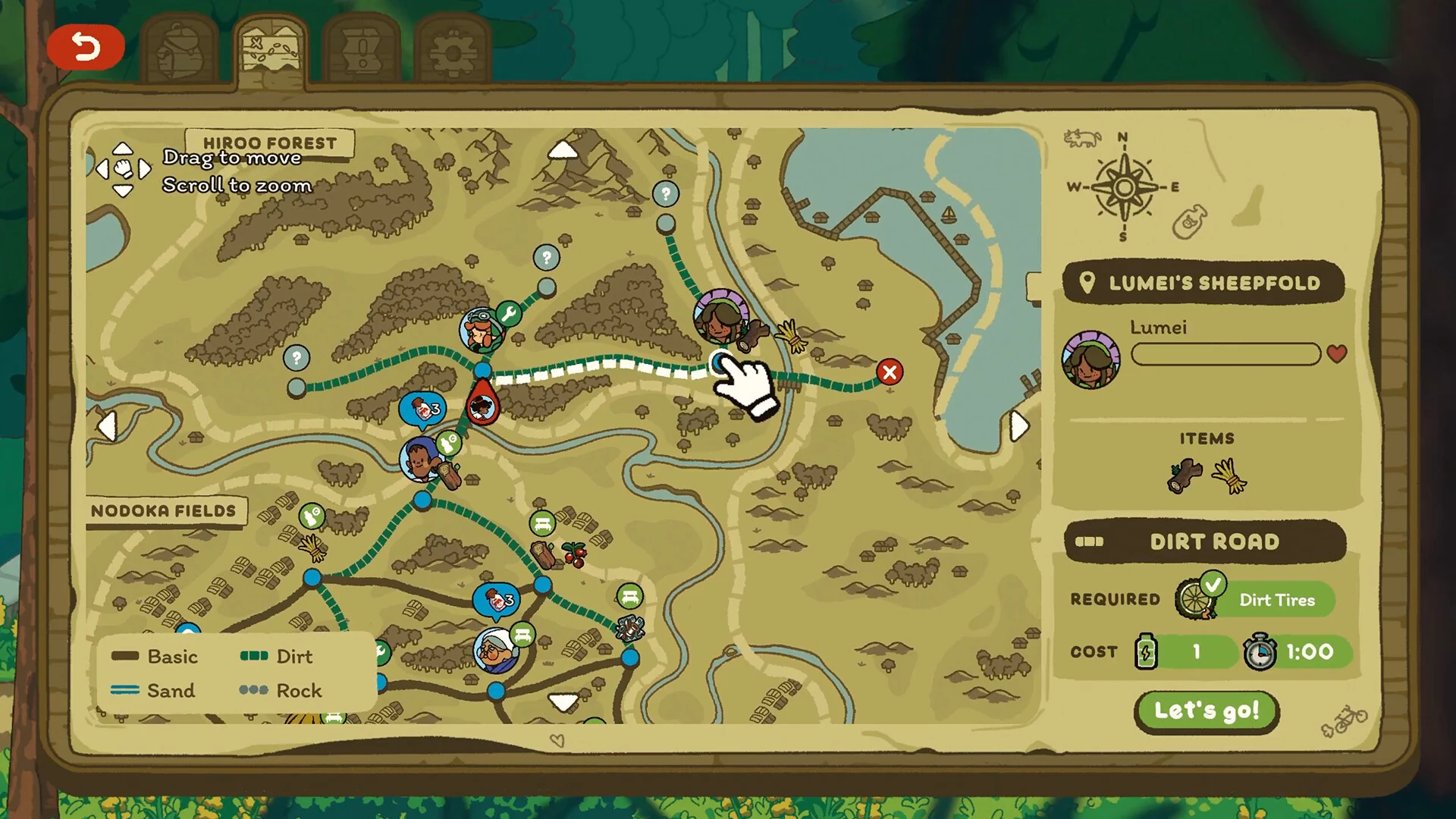
Better bicycle parts make the geography into a reward. The trailer's rock tires open rocky trails, giving a new purchase somewhere specific to take you. That's a sensible use of an upgrade: the player can imagine the destination before finding the last bit of scrap. The promise of another view does some of the work that a larger game might leave to a bigger number.
Taking the scenic route
Milki Delivery deserves to be seen in motion. Neha's little bicycle passes beneath banks of clouds, beside wooden waterfront buildings, and into forests where the road runs between dark trunks and bright flowers. Broad shapes keep the scenes readable. Foreground plants slip past the camera, while distant hills barely move. The depth comes from these layers, leaving the route itself easy to follow.
The controls are built around a mouse. Choose a destination and let Neha pedal there, then click on people and objects to deal with the stop. Steering, balance, and cornering aren't part of the bargain. The ride supplies scenery and encounters between decisions, which leaves the artwork carrying a substantial share of the game's appeal.
That division took work. In a development diary, Doot describes delaying the project while the pair continued to experiment with its central loop. Finding the balance between contemplation and satisfying activity was still unresolved. It's a revealing problem for a small game: removing pressure is straightforward, but the remaining actions still need to earn the player's attention.
The same round tomorrow
Good company matters when the work repeats. Dan Anderson at Quest Daily enjoys the friendships, detours, and gradual expansion of the route. He singles out Snowball, a dog who helps collect materials without using Neha's energy. That's an appealing reward for making a friend, tying a new companion to the practical business of the day.
Jenni Lada at Siliconera finds the characters thinner and the routine too predictable. Her account of a roughly four-hour playthrough describes a cycle that grows in reach without changing much in substance. Even Anderson, the more enthusiastic of the two, finds the later fetch quests repetitive and is ready to finish by the final gathering assignment.
Their agreement identifies the limit more clearly than their scores. Opening a new road can renew a delivery round, but another demand for materials eventually needs more than a pretty destination. Players who enjoy learning a route and making it familiar have an obvious reason to settle in. Those who want the rules to keep developing may exhaust its small set of chores sooner.
There are sensible concessions to repetition. Lada notes that an early bicycle upgrade allows travel through intermediate stops, and praises the resource information on the map. The November 19 update also adds several quest hints and clearer wording about residents going to sleep after 8 p.m. These changes help the player act on a plan. They leave the underlying rhythm intact.
Milki Delivery launched on November 17 for Windows, macOS, and Linux. The developers put the full adventure at three to five hours. The US Steam price is $6.99, with a $5.59 launch offer when checked on November 19. A free demo is available on Steam and in a browser on itch.io, enough to find out whether this is a round you'd like to make.