Appearance
Chivalware: watch your step
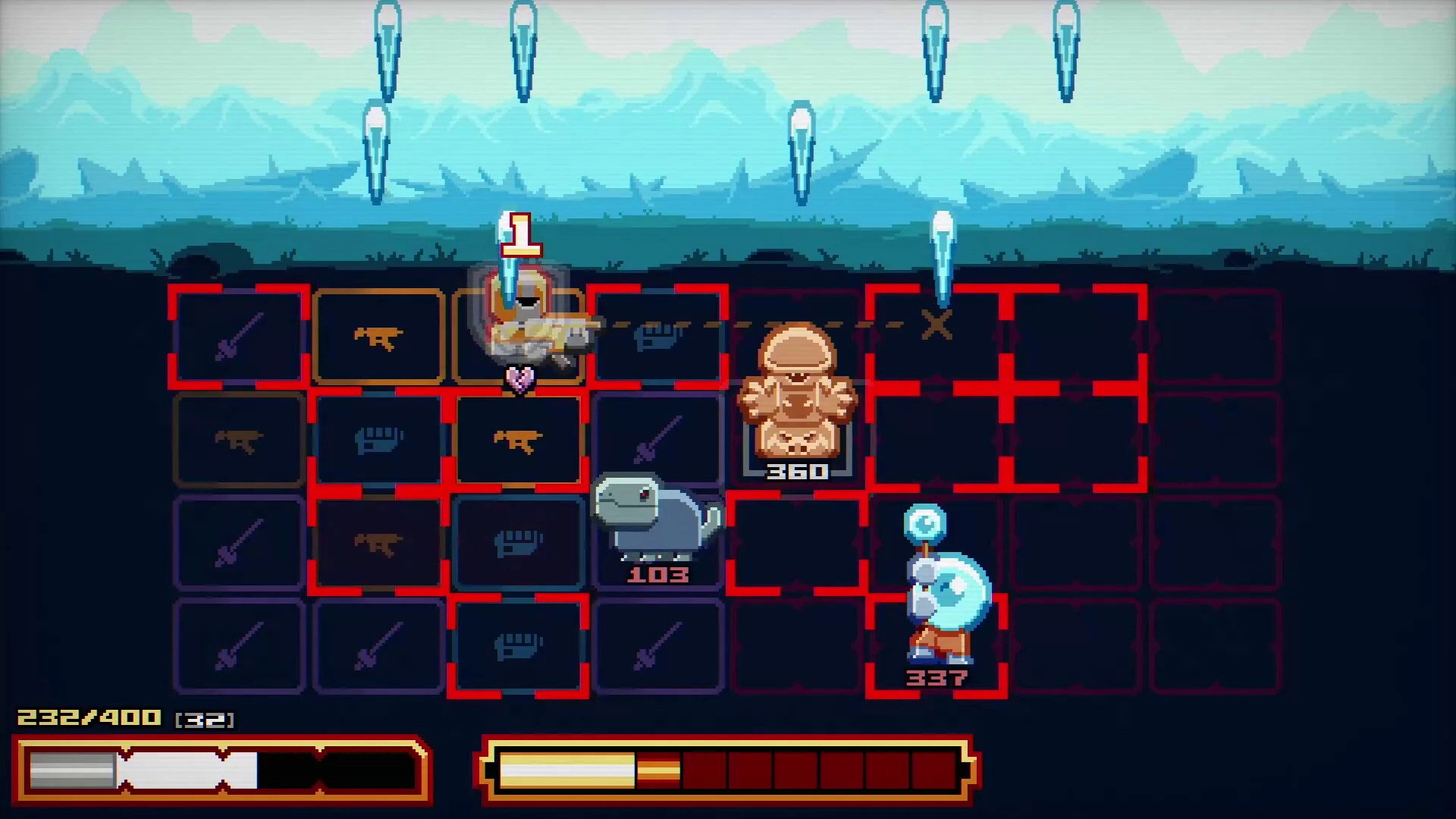
Chivalware leaves its ammunition on the floor. To collect it, you have to join matching tiles while the enemy tries to make standing on them a very bad idea. Regal Pigeon's little grid is a puzzle board, an armory, and a battlefield, all working against the same pair of feet.
It's a neat premise for an action roguelite. You carry three weapons, each tied to a color on the board. Match at least three tiles to charge the corresponding weapon, then spend those charges attacking. Longer matches buy more attacks. Meanwhile, the opposition keeps throwing things at you.
A dangerous place to reload
The cleverness lies in what a single step has to accomplish. A promising run of tiles might charge exactly the weapon you need, but reaching it also means crossing an enemy's line of fire. A safe square can be a poor place to reload. Chivalware makes you read the floor for opportunities and the enemy for warnings, then find a route that serves both.
The launch trailer gives a good account of that competition. Red outlines mark threatened squares, projectiles cut across the board, and large attacks swallow whole rows. The weapon symbols remain underfoot throughout. There's very little spare ground, which gives even a small change in position a job to do.
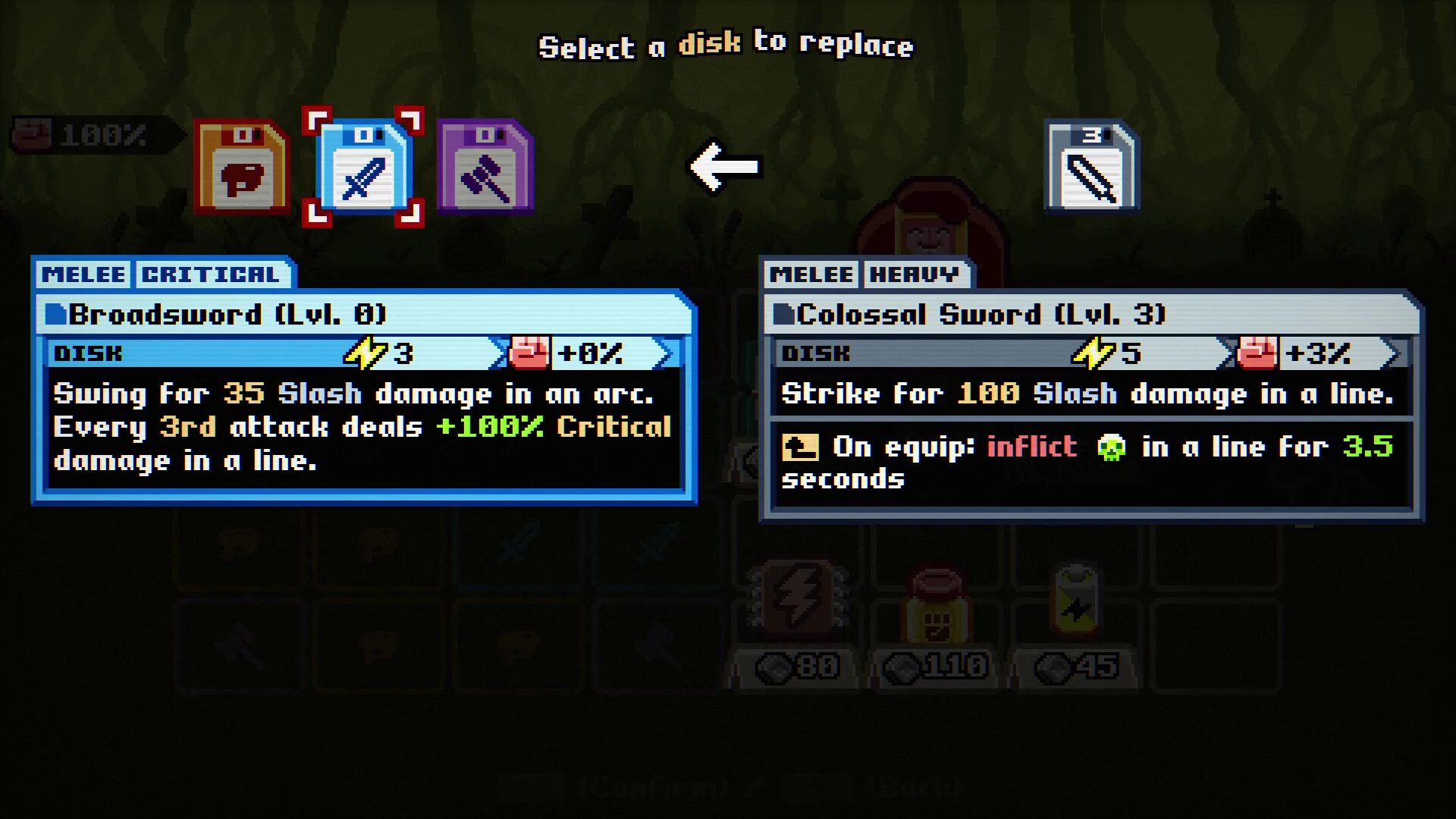
Your equipment changes the calculation. The Broadsword shown below swings in an arc, with a critical effect on every third attack. The Colossal Sword strikes in a line and carries an additional effect when equipped. Choosing between them means thinking about where you want to stand and when you want to strike. The bigger damage number is only part of the bargain.
That connection between equipment and movement is the game's most distinctive idea. A different weapon changes what you want from a match, and what you want from the space around an enemy. The board can remain small while the demands on the player keep changing.
Good weapons need good opposition
The combat has won over reviewers. Jason Coles at TheSixthAxis describes the business of juggling matches, weapons, and incoming attacks as hectic and entertaining. XLan's PC review for Consollection praises responsive controls and readable attack warnings. That's encouraging for a game whose best idea depends on keeping several decisions in your head at once.
Both reviews also find a ceiling to the variety. Enemies and bosses recur, and a generous selection of weapons doesn't quite make up for familiar opposition. Coles points to extra difficulty settings as a reason to return, but questions whether they offer enough novelty. A new sword can change your approach to a fight. It still needs something interesting to hit.
Progression draws a sharper disagreement. Chivalware's leaderboard system brings new characters, equipment, and other options into later runs. Coles enjoys that steady supply of things to try. Tristan Jurkovich, reviewing the Switch 2 version for Cosmic Circus, finds the lack of substantial permanent stat boosts discouraging.
Those preferences matter more than a score. If learning a difficult combat system is your favorite part of a roguelite, new equipment can give you plenty to work on. If you want each failed attempt to leave behind a tougher character, the same reward structure may feel stingy. Chivalware's appeal rests heavily on wanting another crack at the fighting itself.
Making a busy battle readable
The family resemblance to Mega Man Battle Network is intentional. In his reveal post, developer Max describes wanting to spend more time in that series' grid-based battles. Adding match-three rules to the grid gave movement another responsibility. It also gave the player another reason to care about every square.
A system this busy needs clear explanations. Max's September demo update added a status-effect reference to the codex, text beneath encounter icons, and checks to make combat rewards useful to the current build. These are small, sensible details. The challenge should come from choosing between useful actions, and an unexplained symbol gets in the way of that choice.
The animation has a similarly practical foundation. Max describes building it from key poses, joined with sprite squashing, stretching, and shaking. A little distortion can put weight behind a blow or draw the eye to a sudden movement. For a solo developer working with a crowded screen, making a few poses communicate clearly is a useful discipline.
Chivalware arrived on PC and Nintendo Switch 2 on November 5. There's a free Steam demo to try its particular brand of divided attention. The US Steam store lists the full game at $9.99, discounted to $8.99 when checked on November 17.