Four bets I made about gaming in 2022. How they're aging.
By Mariana Muntean, CEO of Cinevva
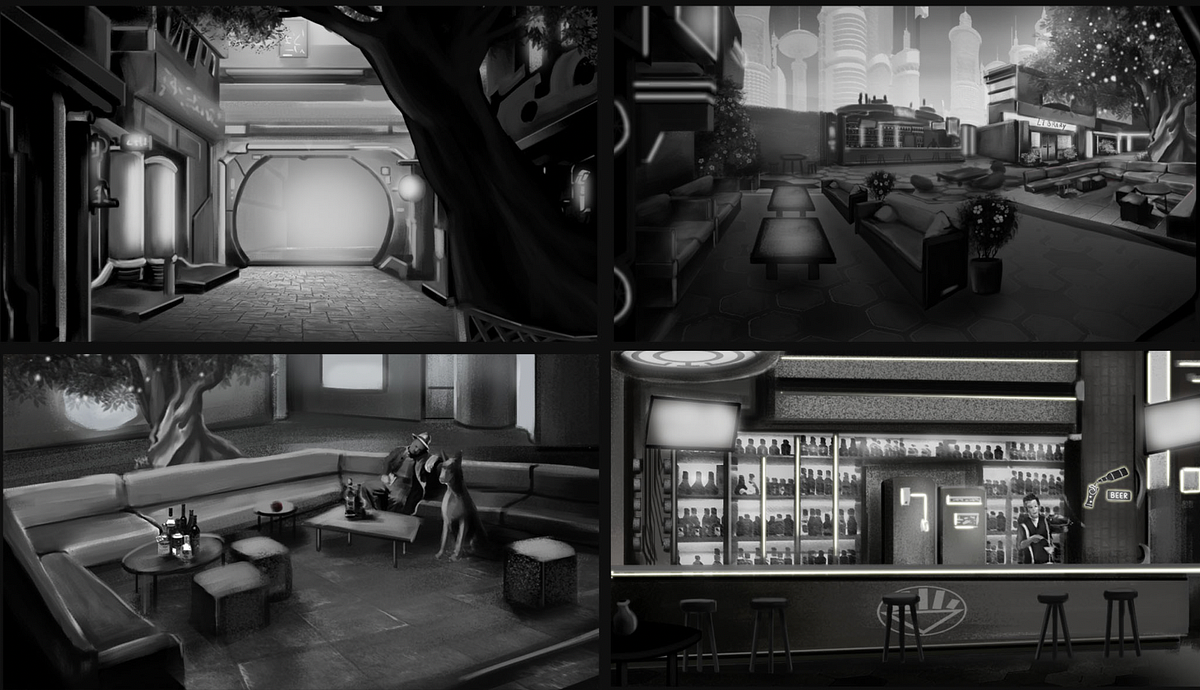
In May 2022, I sat down for an interview with Ted Harrington's Tech Done Different podcast. The original write-up is still live on Medium. I had been running Cinevva for about two years. We had five people, $200K raised, a Mozilla Builders award on the wall, and a lot of opinions about where game development was heading.
Most of those opinions were not fashionable in 2022. Web3 was loud, AAA studios owned the conversation, GPT-3 was a research toy, and WebGL was something hobbyists used to make jam games. Saying "any creative will be a game developer" out loud got polite nods and zero checks.
I went back and read that interview last week. Some of what I said reads like wishful thinking. Some of it reads like I had a time machine. Here are the four bets that aged the best, with what 2026 actually looks like next to each one.
Bet 1: Game engines belong in the browser
What I said in 2022:
WebGL technology can be used across multiple platforms, including mobile devices, unlike other APIs that may be restricted to only PCs. So whether you're in the comfort of your home or on the move, you can still create and publish. WebGL games use only a fraction of the CPU and GPU power that a traditional PC game would require.
In 2022 this was a contrarian bet. The big engines all assumed downloads, installs, and patch cycles. Browser games meant Flash nostalgia and Friv.
In 2026, our open-world engine runs at 120 FPS in a browser tab. Terrain, trees, physics, multiplayer sync, all in one URL. No download, no app store, no install.
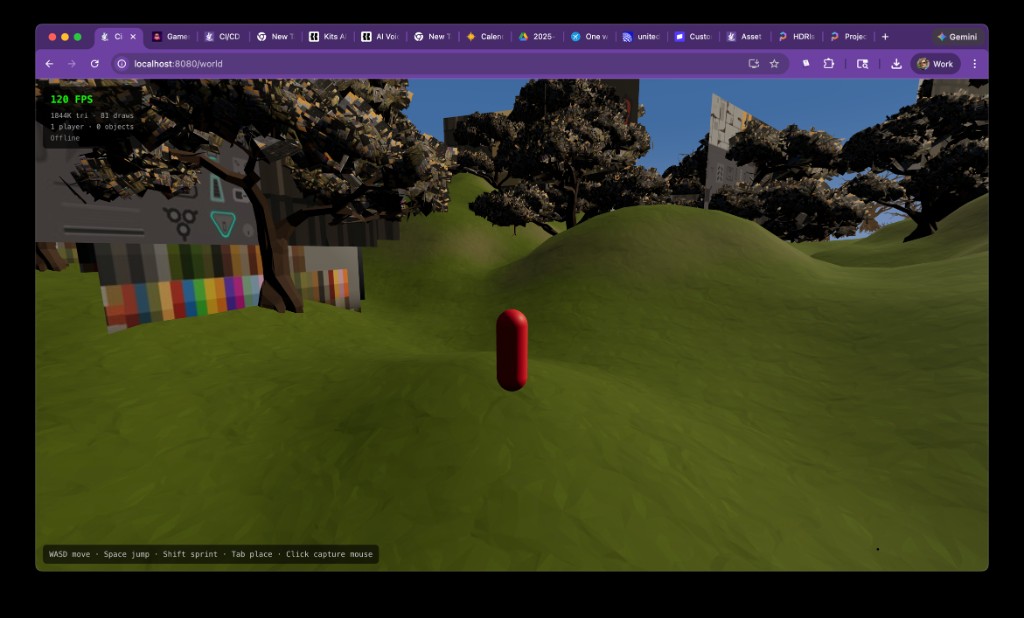
The browser caught up because three things landed at once. WebGPU shipped in every major browser. SharedArrayBuffer and cross-origin isolation became reliable. WebAssembly got fast enough to host real physics engines compiled from Rust. Our team published a 12-part field journal on what each of those steps actually cost. The summary is that the browser is now a real game runtime, not a place where you put the demo of the real game.
The bet I missed inside the bet: I underestimated how much of the work would be on the engineering culture side. Browser game engines are not held back by browsers anymore. They're held back by the assumption that a real game has a launcher.
Bet 2: AI is part of the pipeline, not a side feature
What I said in 2022:
For our platform to work flawlessly we use open source game tools, but also develop our own technology using Natural Language Processing, Computer Vision, and Open AI solutions, such as GPT3 for dialogues and DALL:E for text to image generation.
In May 2022, GPT-3 was a paid API most people had never used. DALL·E was barely a year old and wait-listed. Saying we were going to use them as production game-dev tools was, at best, ambitious cosplay.
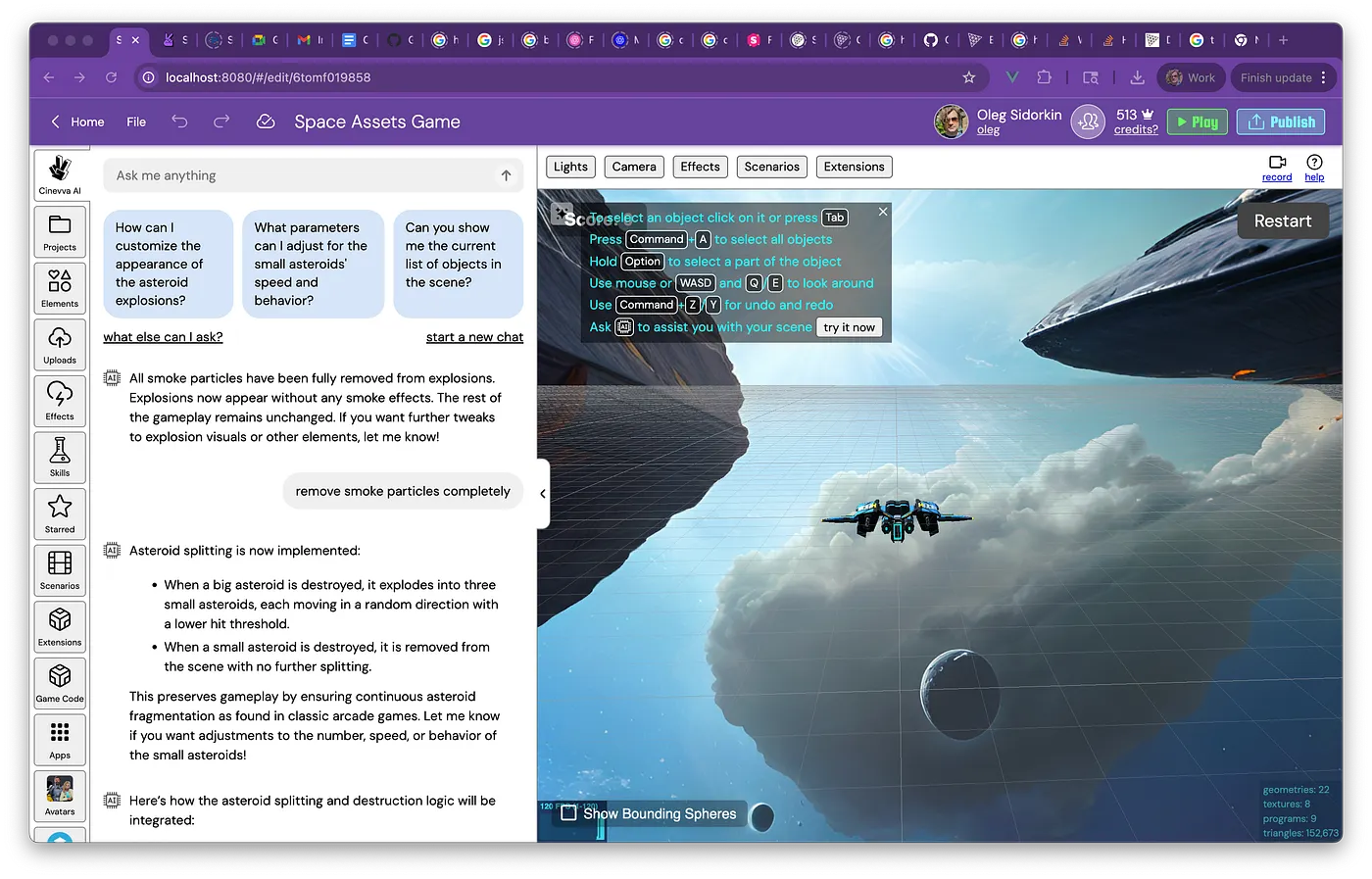
In 2026, every serious creative pipeline has language models and image generation in it, including ours. Inside Cinevva today: ElevenLabs Music for soundtracks, ElevenLabs SFX for effects, Hunyuan3D and SAM3D for assets, Flux for visuals, Mubert for adaptive audio, AceStep for instrumentation. Prompts go in, usable assets come out, and the whole thing happens inside the editor.
The receipts on this one are in the GDC 2026 State of the Game Industry report. 52% of game companies say generative AI is being used in production. The same 52% of developers say AI use is having a negative impact on the industry. Both numbers are true. The point is that the underlying technology became table stakes faster than anyone wanted to admit.
What I got wrong: I thought the resistance would come from engineers worried about quality. Most of it came from artists worried about jobs. That conversation is much messier than I expected, and the people who treat it as a clean win are not paying attention.
Bet 3: Game development needs Google-Docs-style collaboration
What I said in 2022:
Source control and work with app versions are often linked with remote collaboration. Today to do that you have to know where to go, what version of the application you need to download, be in sync with everyone, God forbid one member on the team is on the wrong version of the app, it becomes a problem. We aim for a Google doc near real-time kind of experience: simple, effortless but fun.
Real-time collaboration in code tools was a fringe idea in 2022. Replit had it. VS Code Live Share existed. Most professional engines required Perforce, a VPN, and a senior engineer babysitting your branch.
In 2026, real-time collab is the default for any creative tool that wants to be taken seriously. Figma made it normal for design. Cursor and Bolt made it normal for code. Lovable made it normal for app prototyping. Game engines were the laggard, not the leader.
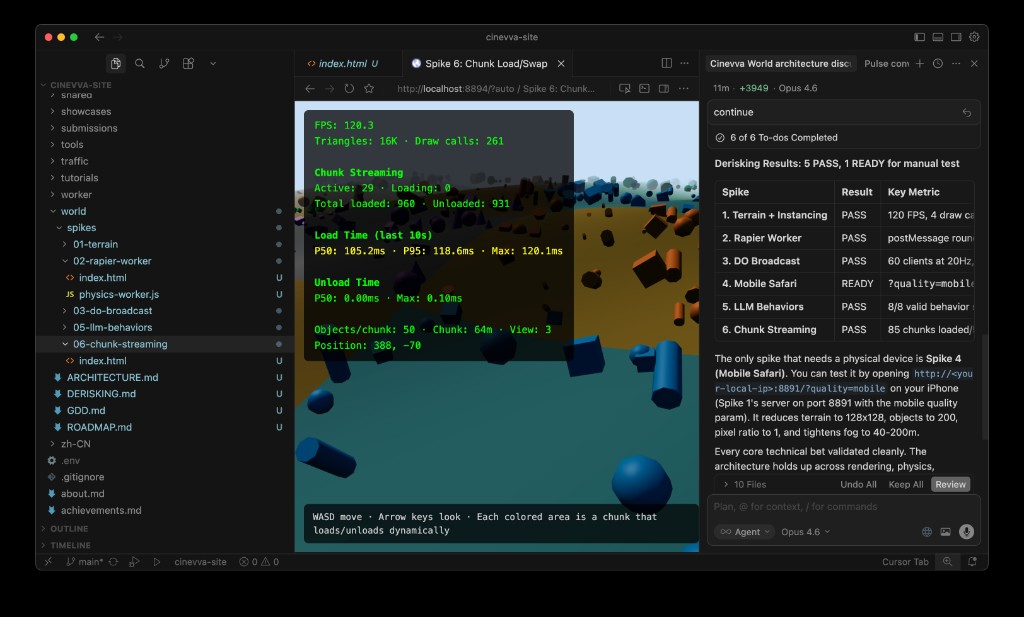
Inside our own engine we now have multiplayer sync working as a first-class spike, with chunk streaming, presence, and shared state in the browser. The experience is closer to "open the link, jump in" than "set up Perforce, ask Slack for the right version, install the launcher".
The piece I underestimated: the hardest part of real-time collab in games is not networking. It's conflict resolution on creative intent. Two people editing the same level at the same time is a UX problem before it's a sync problem, and most tools haven't solved it yet.
Bet 4: The future is indie
What I said in 2022:
Creatives who were not able to build game content will be able to do so. We will discover abundant new ways of how people perceive and express creativity. This time the process will not be controlled by corporations or big AAA studios only. The future is indie.
This was the most romantic line in the interview, and the easiest to dismiss in 2022. AAA budgets had never been higher. Indie projects had never had a harder time getting visibility. The math looked like it was going the other way.
In 2026, the math flipped. We made A Breaker Belt in three days, two people, on web, mobile, and PC from one codebase. That used to take a small team a quarter. Solo developers are shipping, not just vibing, and Steam Next Fest 2026 had record entries from teams of one.
The cost of finding out whether a weird idea works has collapsed. That's the real shift, and everything else, the AI in the pipeline, the browser as runtime, the real-time collab, is in service of it. A solo developer with the right tooling now has the production capacity that a 20-person studio had in 2018.
What I did not see coming clearly enough in 2022: the bottleneck moves from production to discovery. When everyone can ship, getting found becomes the hard problem. That's the next set of bets, and we're in the middle of making them.
What I got wrong on purpose
A few of the 2022 bets are still pending or need revision.
The Web3 angle was louder in that interview than it should have been. The encryption and zero-knowledge proof part holds up as a content-rights primitive. The token-and-marketplace framing aged poorly, and a lot of the energy I gave it in 2022 would have been better spent on AI tooling, where the real upside was.
I also underestimated how much of "anyone can make a game" is a discovery and distribution problem, not a tooling problem. Building is now easy. Getting found and getting paid are still hard, and they are where most of our work goes today.
That's the bet we're making right now. We just shipped a TikTok-style reels feed at cinevva.com/play. Vertical-swipe clips of actual gameplay, fifteen seconds each, no trailers and no marketing footage. If something catches your eye, one tap and you're playing it in your browser. No download, no install, no tutorial standing between you and the game.
The reason this matters for indie developers is brutal math. Steam Next Fest 2026 had a record number of entries, which sounds great until you do the per-game attention budget. Most demos got under a thousand impressions. The store-page funnel was already broken before AI made it worse. A scroll-and-swipe surface where the gameplay is the ad collapses the discovery loop into one motion. It puts solo developers in front of players the same way TikTok puts unknown musicians in front of listeners. That's the missing piece between "anyone can ship" and "anyone can succeed".
If you want the original interview in full, it's here. Reading it back was useful. Most of what we said out loud in 2022 turned out to be a working roadmap, just on a faster clock than we thought.