Arcade › Taçların Savaşı
Taçların Savaşı
How to play
Click the game above and it runs right here in your browser. No download, no installer, no account needed. İlkin Eliyev built it with Cinevva, so it works on a phone or a tablet too.
Discussion
Nobody has said anything about Taçların Savaşı yet. Play it, then tell İlkin Eliyev what you would add next.
Make your own game
Taçların Savaşı was built by İlkin Eliyev with the Cinevva game creator: describe the game you want in chat, watch it get built, and play it in your browser minutes later.
Remix Taçların Savaşı opens the real game in the creator and forks its actual files, chat and design doc, so you start from the code rather than from a description.
Read the build brief for Taçların Savaşı
Cinevva's analyzer read this game's design doc and its source, then wrote the brief below. "Make your own" hands it to the game creator as your opening message, so you start from a real spec rather than a one-line idea.
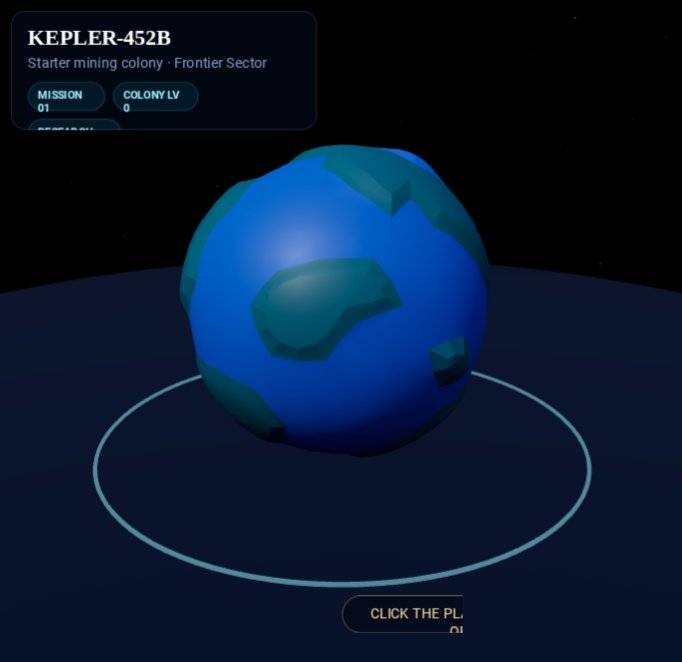
Create a browser-based 3D grand-strategy map game titled “TAÇLARIN SAVAŞI” (Turkish UI), using Three.js or an equivalent WebGL engine. The game opens on a dark navy background with a top-down, angled perspective camera looking at a physical strategic map. Show a roughly rectangular green continent floating in dark blue water, with subtle fog, soft shadows, warm sunlight, scattered low-poly gray-green mountain/ridge cones and dark green stylized conifer trees. Add tan trade-road strips connecting the seven capitals. The map should be draggable with pointer/mouse/touch, clamped to a reasonable area; use the mouse wheel to zoom in and out while keeping the angled strategic view.

Populate the map with exactly seven colorful kingdoms, each represented by a translucent colored circular/elliptical territory with a matching outline, a small low-poly stone castle (round base, tower, and colored conical roof), and a floating readable name label. Arrange them approximately as follows: Aurelia at southwest (-24,-13), Boreas west/south (-4,-15), Cyradon east/south (19,-11), Demeria west/center (-24,8), Eldoria central (1,6), Falken east/center (24,9), and Galen south/central (6,19). Use distinct muted colors: terracotta Aurelia, blue Boreas, purple Cyradon, ochre Demeria, green Eldoria, brown-red Falken, and olive Galen. Connect capitals with roads: Aurelia-Boreas, Boreas-Cyradon, Aurelia-Demeria, Boreas-Eldoria, Cyradon-Falken, Demeria-Eldoria, Eldoria-Falken, Eldoria-Galen, and Falken-Galen.

Each kingdom has the following actual starting data: Aurelia population 920, army 180, treasury 420; Boreas 760/150/360; Cyradon 880/170/395; Demeria 630/120/310; Eldoria 1100/220/520; Falken 690/135/330; Galen 810/155/380. Create two small colored army units per kingdom at its capital, using simple capsule-like bodies and a vertical banner. Clicking a territory or castle selects that kingdom and updates the right-side information panel with its name, capital name, population, army, an army strength meter, treasury in gold, and status “Barışta” or “Savaşta”.

Build the fixed HUD in the same visual style as the reference: top-left rounded brand card with gold border, the title “TAÇLARIN SAVAŞI” and subtitle “7 krallık • yaşayan strateji haritası”; top-right compact stat cards for “Gün”, “Hazine”, and “Durum”, initially showing day 1, treasury display 420, and “Barış”. On the right below the stats, place a dark translucent rounded panel titled “Bir krallık seç” with explanatory Turkish text: “Haritadaki sancaklara tıklayarak diplomasi ve ordu yönetimi yap.” If nothing is selected, show “Bir bölge seçilmedi.” Include full-width buttons: gold “50 asker topla · 80 altın”, red “Savaş ilan et”, and dark secondary “Zamanı durdur”. Initially the recruit and war buttons are disabled until a kingdom is selected; pause remains available. At bottom-left show a compact hint card: “Sol tık / dokun: krallık seç · Sürükle: haritayı kaydır · Tekerlek: yakınlaş” and explain that gold rises each day and armies advance toward enemy castles after war begins. On small screens, stack the top bar and move the right panel to the bottom.

Gameplay rules: selecting a kingdom enables recruitment if it has at least 80 gold. Clicking recruitment subtracts 80 gold and adds 50 soldiers, then writes a dated event to a scrollable log such as “Gün X: Aurelia 50 asker topladı.” Clicking “Savaş ilan et” chooses the nearest living other kingdom automatically, creates an attacking army containing about 48% of the selected kingdom’s army (minimum 40), subtracts that force from the attacker down to a minimum remaining army of 30, marks the unit as attacking, changes the global status to “Savaş”, and logs a Turkish declaration such as “Aurelia, Boreas krallığına savaş ilan etti!”. Animate the attacking army as a colored unit traveling from the attacker’s capital to the target capital in a direct interpolated route, with a small upward arc/bounce; it need not literally follow the drawn road. When it arrives, resolve a probabilistic battle: attacker power is its force multiplied by a random factor from 0.72 to 1.27, defender power is the defender’s army multiplied by a random factor from 0.55 to 1.25. If attacker power wins, reduce defender army by roughly 45% of attacker power (not below zero), reduce defender population by 18 (not below 120), and log that the attacker broke the defender’s army. Otherwise reduce attacker army by roughly half its attack power and defender army by roughly 25% of its defense power, logging that the defense held. Remove the attacking unit after resolution and refresh the selected panel.

The simulation advances only while not paused. Every approximately four real seconds, increment the day, update the day stat, add 25 gold to every kingdom and, with 35% probability per kingdom, add 8 army units. The pause button toggles between “Zamanı durdur” and “Zamanı başlat”. Keep a maximum of six recent dated log entries. Use warm gold typography and Georgia-style serif headings against charcoal translucent panels, with subtle borders, gradients, blur, and shadows. Preserve the restrained low-poly medieval-map aesthetic visible in the screenshot: no character-scale combat view, no menus or extra game modes, and no invented features such as diplomacy trees, building upgrades, victory screens, or player movement.