Appearance
Skip to content
Arcade › Ride Lab Garage
Ride Lab Garage
How to play
Click the game above and it runs right here in your browser. No download, no installer, no account needed. Blayze Mcauslan built it with Cinevva, so it works on a phone or a tablet too.
Discussion
Nobody has said anything about Ride Lab Garage yet. Play it, then tell Blayze Mcauslan what you would add next.
Make your own game
Ride Lab Garage was built by Blayze Mcauslan with the Cinevva game creator: describe the game you want in chat, watch it get built, and play it in your browser minutes later.
Remix Ride Lab Garage opens the real game in the creator and forks its actual files, chat and design doc, so you start from the code rather than from a description.
Read the build brief for Ride Lab Garage
Cinevva's analyzer read this game's design doc and its source, then wrote the brief below. "Make your own" hands it to the game creator as your opening message, so you start from a real spec rather than a one-line idea.
Create a browser-based 3D garage/showroom customization game titled “Ride Lab Garage.” Use Three.js-style real-time 3D rendering with a dark navy-black background and fog, soft shadows, ACES-style cinematic tone mapping, and a fixed HUD layered over the canvas.

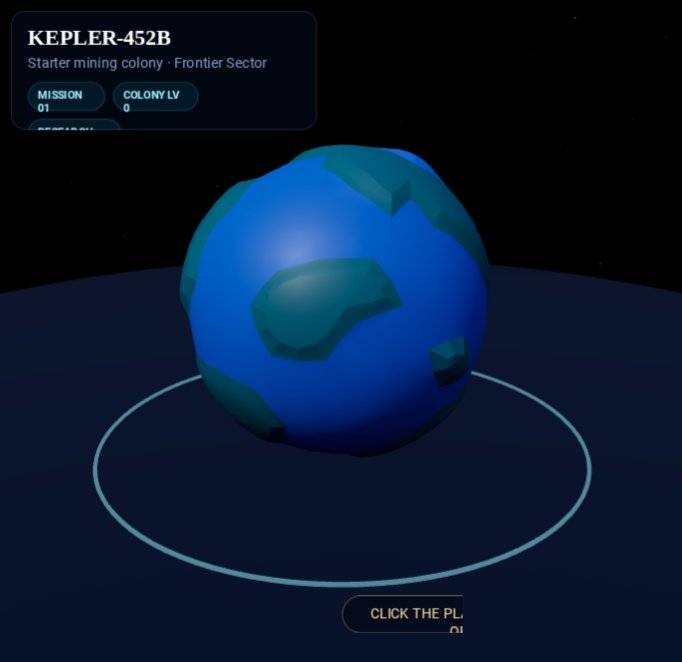
Scene and camera: show a large dark circular garage floor with a raised cylindrical display pad in the center (about 4.5 units radius and slightly elevated), dark blue-gray material, and a thin glowing cyan ring around its edge. Place a small ride model on the pad. Use a perspective camera from an elevated three-quarter angle, initially looking toward the pad from roughly (8.5, 6.5, 10.5), and let the player drag to orbit the camera and scroll/pinch to zoom, with damping and limited zoom/polar range. Light the scene with a cool hemisphere light, a warm directional key light that casts soft shadows, and a cyan rim light. The surrounding floor is a broad dark circular floor fading into dark fog.

Add understated stunt-park props around the showroom, visible when the camera is moved: a blue-gray wedge jump ramp with orange edge stripe, another side ramp, a quarter pipe with an orange lip, a low orange grind rail, and a dark landing pad. These are scenery only; there is no collision gameplay or free driving.

Rides: provide five selectable vehicle cards and corresponding simple 3D models on the display pad:
- BMX: compact orange bicycle with two black torus wheels, orange frame and fork, dark seat/pedals, and silver/dark handlebar. Base stats Speed 6/10, Handling 9/10, Durability 5/10. Description: “Quick tricks and tight control for street lines.”
- MTB: slightly larger green bicycle based on the BMX model, scaled up, with a wider seat. Base stats 7/10, 7/10, 8/10. Description: “Trail-ready suspension and stable landings.”
- Skateboard: pink/purple deck with trucks and four small dark wheels; use a simple low-poly board. Base stats 5/10, 10/10, 4/10. Description: “Lightweight street deck with snappy handling.”
- Dirtbike: chunky orange and blue dirt bike with two larger black wheels, dark fork, body/tank, seat and handlebars. Base stats 10/10, 6/10, 9/10. Description: “Big jumps, big torque, built for rough terrain.”
- Cop Car: a compact stylized police car model in light blue/blue-gray; it may be loaded as an external GLTF asset if available, otherwise use a simple low-poly approximation. Base stats 8/10, 5/10, 10/10. Description: “Patrol power with reinforced bodywork and siren style.”
Only the currently selected ride is visible on the pad. Models should gently bob and yaw while idle; do not add driving controls.

HUD layout and styling: use a responsive full-screen overlay with translucent near-black panels, subtle white borders, rounded corners, backdrop blur, and soft shadows. At the top, show a wide header reading “RIDE LAB GARAGE,” subtitle “Build your dream street machine,” and a gold coin icon with starting balance “1200.” On desktop, put a “CHOOSE A RIDE” panel at upper-left and an “UPGRADE BAY” panel at upper-right. On mobile, move these panels near the bottom in two narrow columns with scrolling on the upgrade panel.

The left panel contains a two-column grid of selectable ride buttons. Each card shows the ride name and a short description. The active card has a cyan border/glow and blue-tinted gradient. Below the grid is a large cyan button labeled “TEST RIDE SELECTED.” Under it, show the hint: “Drag to orbit the garage. Scroll or pinch to zoom. Test Ride sends the selected ride around the display pad.”

The right Upgrade Bay panel shows the selected ride name and description, then three horizontal stat rows: Speed, Handling, and Durability. Each row displays a numeric value like “6/10” and a dark track with a cyan-to-mint gradient fill proportional to the value. Below, show three upgrade rows: “Turbo drive” affects Speed, “Pro controls” affects Handling, and “Reinforced frame” affects Durability. Each row displays “Level 0/3 · [cost] coins” and a gold UPGRADE button. Upgrade prices are ride-specific and increase by current level + 1: BMX costs 90/80/70 for speed/handling/durability; MTB 110/95/85; Skateboard 70/75/60; Dirtbike 140/120/130; Cop Car 130/100/150. Start every ride at upgrade level 0, and each purchased level adds 1 to the matching stat, capped at 10 and level 3. Disable the button if the level is 3 or the player cannot afford it. Deduct coins immediately when purchased. The starting balance is 1200, and upgrades are tracked separately for each ride.

Interaction: clicking a ride selects it, makes only its model visible, refreshes the stats and upgrade panel, stops any test ride, and shows a small temporary rounded toast such as “[ride] selected.” Clicking an upgrade button deducts the price, increments that ride’s matching upgrade, refreshes the UI, and shows a temporary toast such as “Speed upgrade installed.” Clicking TEST RIDE SELECTED toggles between “TEST RIDE SELECTED” and “STOP TEST RIDE,” with a toast “Test ride started” or “Back in garage.” While test ride mode is active, animate the selected ride around a circular path over the display pad. Use radius 5.5 for all rides except the Cop Car, which uses radius 3.1; movement speed is 1.2 + Speed stat × 0.07. Rotate the model to face along the path and gently tilt non-car rides side-to-side. There is no score, timer, damage, enemy, or win/lose state—this is a garage selection and upgrade visualization with an animated test ride.

Use a clean condensed/system sans-serif visual style, bright off-white text, muted blue-gray secondary text, cyan interaction accents, mint stat fills, and gold upgrade/coin accents. Ensure the 3D canvas remains behind the HUD and is responsive to window resizing. Preserve the exact title, five ride names, descriptions, starting coin value, stats, upgrade names, prices, labels, and behavior described above rather than inventing extra gameplay systems.