Arcade › Cloud Bottle Lab
Cloud Bottle Lab
How to play
Click the game above and it runs right here in your browser. No download, no installer, no account needed. Catherine Elise Yusuf built it with Cinevva, so it works on a phone or a tablet too.
Discussion
Nobody has said anything about Cloud Bottle Lab yet. Play it, then tell Catherine Elise Yusuf what you would add next.
Make your own game
Cloud Bottle Lab was built by Catherine Elise Yusuf with the Cinevva game creator: describe the game you want in chat, watch it get built, and play it in your browser minutes later.
Remix Cloud Bottle Lab opens the real game in the creator and forks its actual files, chat and design doc, so you start from the code rather than from a description.
Read the build brief for Cloud Bottle Lab
Cinevva's analyzer read this game's design doc and its source, then wrote the brief below. "Make your own" hands it to the game creator as your opening message, so you start from a real spec rather than a one-line idea.
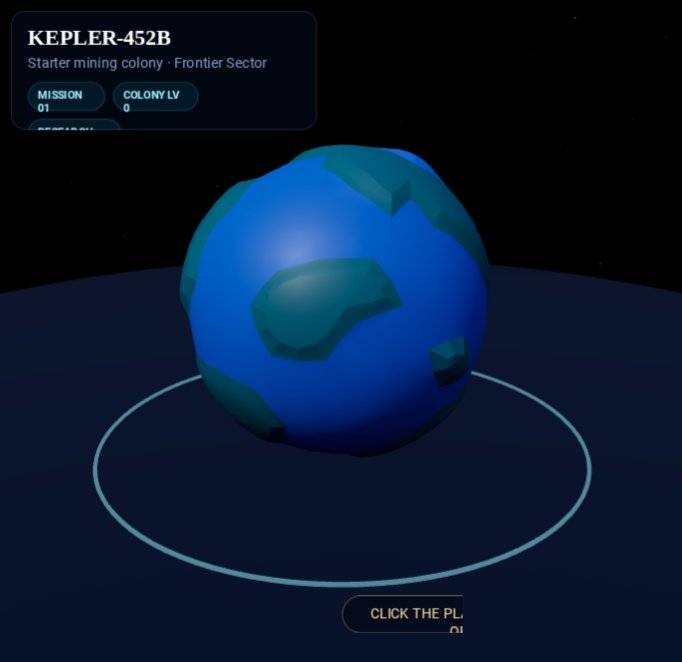
Create a browser-based educational 3D simulation titled “Cloud Bottle Lab 3D” (also branded Cloud Bottle Lab). Use a dark navy, cyan-accented scientific dashboard layout: a header with the title, a short explanation about rotating a bottle, aerosol scattering a centered laser, and using a LUX meter to connect particle loading with rainfall suppression and prolonged drought in Kalimantan, plus a “3D EARTH-SYSTEM SIM” badge. The main area is split into a large left 3D lab viewport and a scrollable right control panel; on narrow screens stack them vertically. In the 3D viewport, show a transparent, glowing cyan glass bottle/container suspended over a dark teal circular lab base with a faint cyan measurement ring. The bottle is a horizontally oriented rounded capsule/cylindrical body with a rounded rectangular appearance, glass transparency and cyan edge glow, a neck/rim at the top center, and a pale sealed cap. Inside it, render many small warm pale-gold aerosol particles distributed through the volume; particle count and size should visibly increase with aerosol loading. Include a soft translucent pale-blue cloud layer near the upper-middle of the bottle whose size/opacity grows with humidity and aerosol. Put a horizontal red/pink laser beam through the center of the bottle, with a brighter thin core and a red glowing emitter block on the left. Put a cyan glowing LUX sensor block on the right end of the beam, with a small dark display face. Label or otherwise communicate the laser-to-aerosol-to-sensor measurement. Allow the user to orbit/rotate the 3D scene by dragging and zoom with wheel or pinch; use a perspective camera, damping, dark blue background, atmospheric lighting, transparent materials, and subtle laser pulsing. The right panel must have a “Trial conditions” section with four live range sliders: “Aerosol particles in bottle” from 0–100, default 45%; “Bottle humidity / moisture” from 20–100, default 70%; “El Niño dryness pressure” from 0–100, default 55%; and “Laser exposure” from 3–20, default 10, displayed as seconds (default 1.0 s by dividing the slider value by 10). Show live percentage/seconds outputs. Provide a prominent “Run trial” button and a “Commit trial” button, plus hint text encouraging low, medium, and very high aerosol comparisons. Derive and continuously display the simulation readout exactly in this spirit: PM2.5 proxy = round(5 + aerosol*2.05); optical scattering/depth is based on aerosol and humidity; LUX at the sensor decreases exponentially as scattering increases (with a minimum around 8); cloud amount rises with humidity and aerosol; rainfall index decreases as El Niño pressure and aerosol increase, while humidity raises it; drought feedback rises with El Niño pressure, aerosol, and low rainfall; and simulated hotspots increase with El Niño pressure and aerosol. In the live readout show three metric cards: “PM2.5 proxy µg/m³”, “LUX at sensor”, and “Rainfall index”. Under them show a horizontal gradient risk bar and text in categories “low”, “moderate”, “high”, or “prolonged risk”, followed by the number of simulated hotspots. Run trial should capture the current condition, set status text to “Trial running • particles interacting with the beam”, change the button text to “Re-run trial”, and after a delay based on laser exposure complete with “Trial complete • inspect the LUX and rainfall response”. Commit trial should save the current result and append a visible entry under “Committed trials”, showing trial number, aerosol percentage, PM2.5, LUX, rainfall percentage, and a small drought-risk gradient bar; update the saved count and status to “Trial committed • change aerosol loading for the next comparison”. Initially show “No trials yet. Run and commit a condition set.” Below the trials include a “Real Earth-system anchors” information section with the visible figures 170–300 ppm (CO₂ range in Antarctic ice-core air over the last 800,000 years), 30–40% (normal rainfall comparison for Indonesia during the 1997 El Niño dry period),6.1B (World Bank estimate of Indonesia’s 2015 fire cost), and 33% (2015 burned area reported as peatland in the cited World Bank analysis). Include explanatory text that aerosols are cloud seeds, but too much smoke can keep droplets small, reduce cloud growth, and suppress efficient rain; El Niño dryness plus smoke and peat fires can dry peat and forests and increase later fire susceptibility; explicitly clarify that the bottle shows optical/microphysical direction and is not a regional forecast. Include source links for NASA ice-core records, NOAA’s Indonesia 1997 assessment, the World Bank fire-cost note, and NASA’s smoke/rainfall article. Style the interface with rounded dark translucent panels, fine blue-gray borders, cyan headings and values, muted blue-gray helper text, compact system font typography, gradient cyan primary button, responsive layout, and clear scientific dashboard hierarchy. The game is an interactive educational experiment rather than an action game: the goal is to vary conditions, run and commit multiple trials, rotate the bottle to inspect the particles/beam/sensor, and compare LUX and rainfall responses.More free browser games