Appearance
Skip to content
Arcade › Block Orbit
Block Orbit
How to play
Click the game above and it runs right here in your browser. No download, no installer, no account needed. rennerellistx built it with Cinevva, so it works on a phone or a tablet too.
Discussion
Nobody has said anything about Block Orbit yet. Play it, then tell rennerellistx what you would add next.
Make your own game
Block Orbit was built by rennerellistx with the Cinevva game creator: describe the game you want in chat, watch it get built, and play it in your browser minutes later.
Remix Block Orbit opens the real game in the creator and forks its actual files, chat and design doc, so you start from the code rather than from a description.
Read the build brief for Block Orbit
Cinevva's analyzer read this game's design doc and its source, then wrote the brief below. "Make your own" hands it to the game creator as your opening message, so you start from a real spec rather than a one-line idea.
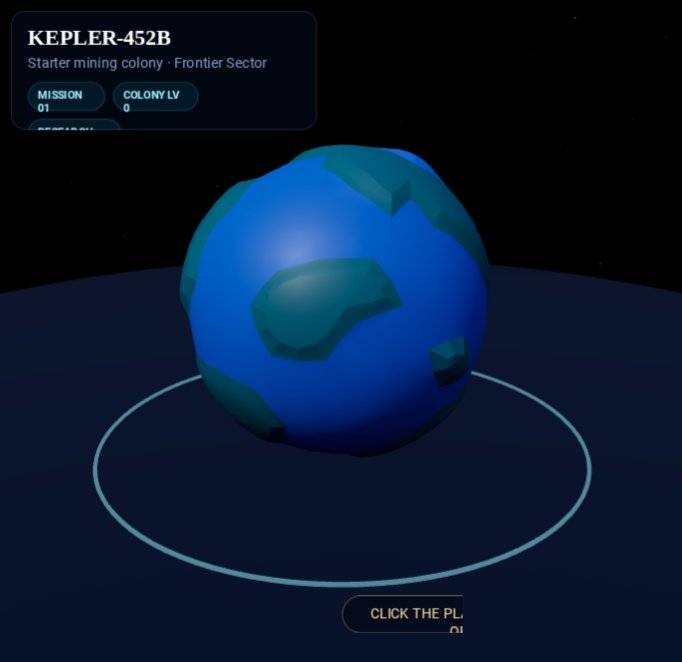
Create a browser-based 3D third-person action/collectathon titled “Block Orbit” using Three.js or an equivalent WebGL engine. The game takes place in a dark navy starless-looking space backdrop with matching fog, strong soft shadows, cool hemisphere lighting, a bright directional sun, and a purple rim light. Show three separate small spherical planets floating in space, each with a flat raised cylindrical top surface that acts as walkable ground, plus a faint tilted glowing orbit ring around it. Planet 1 is the starting Moss planet at approximately (0,0,0): a dark green sphere with a vivid light-green top. Planet 2 is the Lava planet at (25,3,-10): a dark red/brown sphere with an orange top. Planet 3 is the Moon planet at (-24,7,-18): a slate/blue-gray sphere with a pale blue top. Make the planets visible from a pulled-back over-the-shoulder camera and allow instant travel among them via the on-screen planet buttons labeled Moss, Lava, and Moon.

The controllable avatar is a small block-built humanoid hero: cubic tan head and arms, bright blue rectangular torso, dark blue block legs, with simple voxel/adventure-game proportions. Start it standing on the Moss planet’s top. Orient the character to its movement direction and keep the camera behind and slightly above it. The camera should follow smoothly and support mouse/touch dragging to orbit the view horizontally and vertically, with vertical look clamped so the view remains useful. Movement uses WASD or arrow keys, projected onto the current planet’s local surface: W/up moves forward, S/down backward, A/left and D/right strafe. Move at roughly 8 world units per second and constrain the avatar to a radius of about 9.8 from the active planet’s center, so it stays on the circular top/planet surface. Space triggers a jump with gravity, producing a short arcade jump. The character should conform to the local up direction of the planet, and the camera should remain roughly 5 units above and 9.5 units behind the avatar.

Place six rotating, bobbing golden octahedral collectible stars around the planets: three on/near Moss, two near Lava, and one near Moon. They should gently oscillate vertically, spin continuously, disappear when the player comes within roughly 1.5 units, increase the star counter by one, and display a temporary centered message “Star collected!”. Use the HUD counter format “Planet 1 · Hearts 3 · Stars 0”, updating the planet number, health, and total stars.

Load or create stylized low-poly alien enemies and a larger boss. Place two normal aliens around Moss, an alien and a demon around Lava, and an alien around Moon. Also place a larger alien boss on Moss. Enemies should have idle animation if available, cast/receive shadows, and use bright playful monster silhouettes. Normal enemies within about 7 units should slowly pursue the player on the horizontal plane and face the player. Contact within about 1.55 units damages the player, subtracting one of three hearts, with a short damage cooldown and a temporary “Ouch!” message. The boss should rotate in place rather than pursue. Give normal enemies 1 HP and the boss 5 HP. The player attacks with an ATTACK button at bottom-right, and also with E or Enter; attacks have a short cooldown of about 0.45 seconds and hit every enemy within 3.4 units. Each hit reduces enemy HP, slightly shrinks its model, and awards 1 star/score for a normal enemy or 2 for the boss. Hide defeated enemies and show “Enemy defeated!” or “Boss defeated!”; show “Enemy bonked!”/“Boss hit!” for nonlethal hits. Do not add projectiles or ranged weapons.

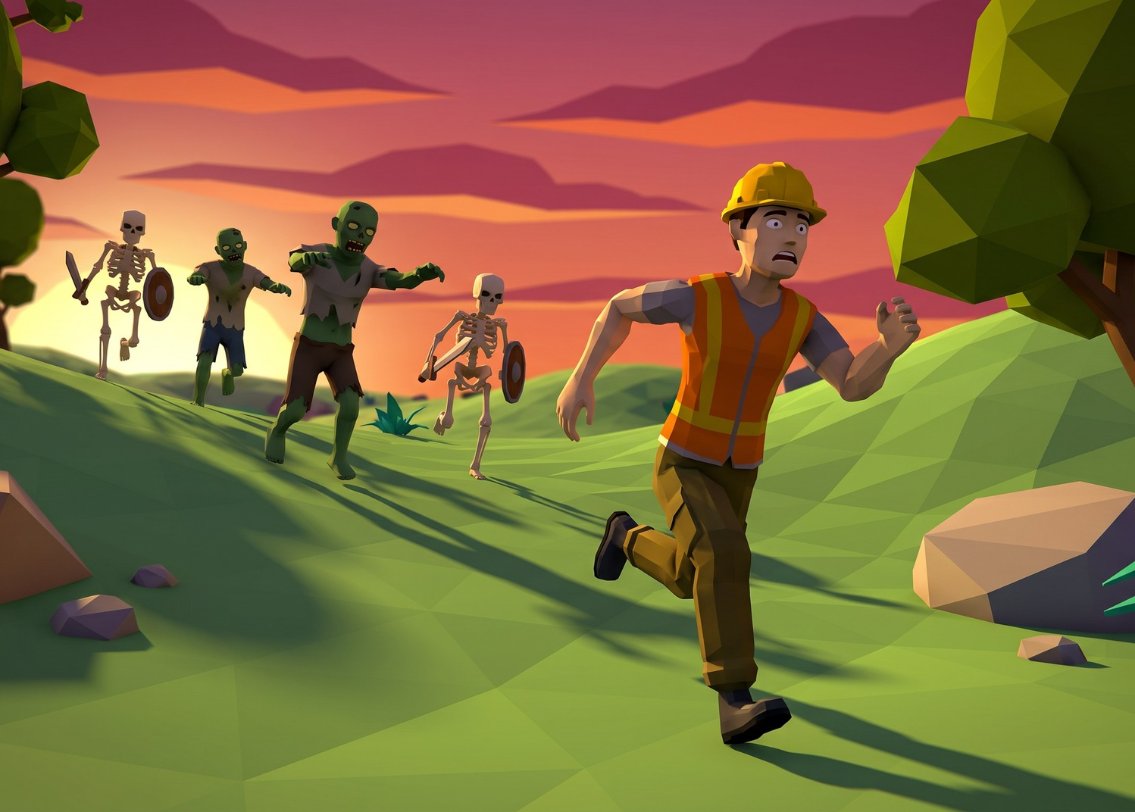
Add simple low-poly environmental props: cube-like trees on Moss (one toward the back-left and another nearby), a large crystal on Lava, and a large crystal on Moon. Use soft shadows and the same colorful chunky voxel/low-poly aesthetic. The attached visual reference shows the intended playful alien/planet presentation: rounded green terrain, purple/green monster-like enemies, chunky props, vivid colors, and a large readable mobile attack control; retain the code-defined block humanoid as the player avatar.

Overlay the game with a fixed translucent dark navy glass HUD with rounded corners and thin pale borders. In the top-left, show uppercase spaced title “BLOCK ORBIT” in pale blue and beneath it the stats line. In the top-right, show the instructional text: “WASD / arrows move · Space jumps · drag to look · tap ATTACK to swat enemies”. At the bottom center, show three rounded buttons: green “Moss”, amber “Lava”, and lavender “Moon”. At bottom-right show a large circular pink/coral ATTACK button. Make the HUD pointer-transparent except for these controls, responsive on small screens, hide the tips on narrow mobile screens, and preserve touch-action support. Center temporary notifications in a dark translucent rounded panel.

Teleporting through a planet button should move the player to that planet’s top, reset jump state and facing, preserve score, and ensure at least two hearts after teleporting. If health reaches zero, mark the game over state, restore health to three, and show the message “The orbit is lost — tap a planet to respawn”; planet buttons should still provide the respawn/travel interaction. Use a fixed dark-blue background, perspective camera, fog fading into space, antialiased rendering, and responsive canvas resizing. The core loop should continuously update movement, jump physics, collectible animation, enemy animation/AI, attack cooldowns, HUD, lighting, and rendering.